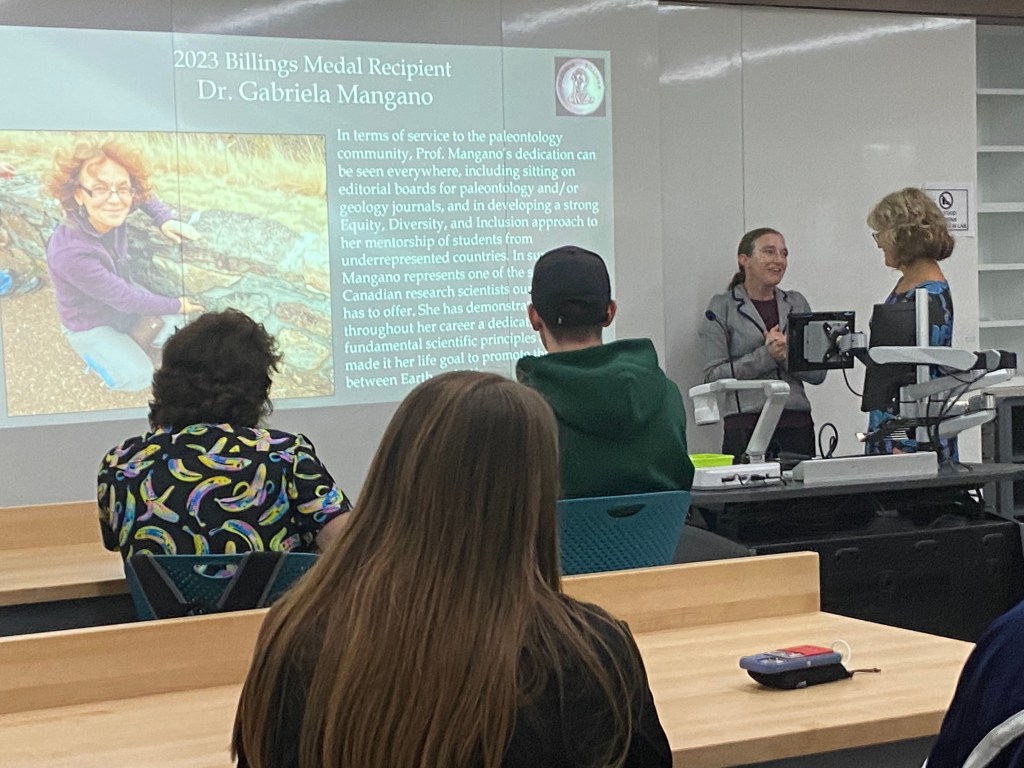
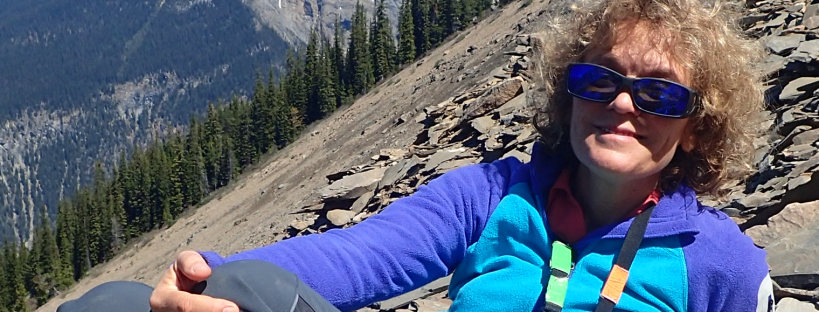
Gabriela Mángano receives the Distinguished Career Award at GSA!

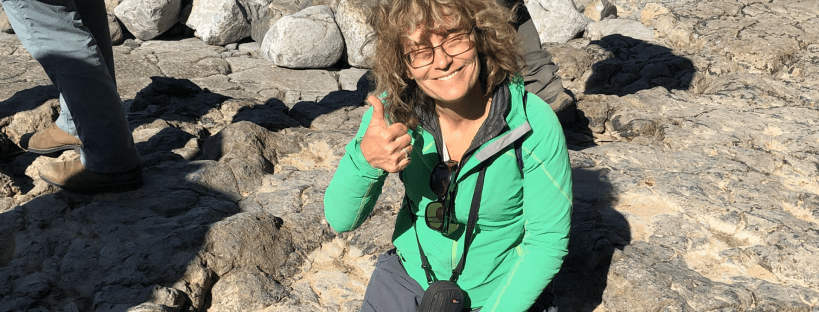
At the annual meeting of the Geologic Society of America in Pittsburgh, Pennsylvania, our own Dr. Gabriela Mángano is the 2023 recipient of the Distinguished Career Award from the Geobiology and Geomicrobiology Division! We’re super thrilled to have Gabriela receive this awesome award and couldn’t agree more as to her deserving of this recognition.

From the Geologic Society of America Geobiology and Geomicrobiology Division website: “Gabriela has approached geobiology from the perspective of animal-substrate interactions in deep time. She likes to move along the geologic time scale to detect evolutionary breakthroughs and track the deep history of bioturbation. Her research attempts to reconstruct the emergence of modern marine benthic ecology discern environmental from evolutionary controls, and temporally calibrate ichnofacies and ichnofabrics.”

Congratulations Gabriela from all of us at Ichnoplanet!

Photos courtesy of the Geologic Society of America Geobiology and Geomicrobiology Division and Luis Buatois

Written by Jack Milligan

Tracking hadrosaurs in northwestern Alberta with the Boreal Alberta Dinosaur Project

This past summer, Jack Milligan represented Ichnoplanet during fieldwork conducted by the Boreal Alberta Dinosaur Project (BADP) at the University of Alberta (UA), and the Philip J. Currie Dinosaur Museum (PJCDM) under the leadership of UA professor Dr. Corwin Sullivan, and USASK adjunct professor and PJCDM curator Dr. Emily Bamforth. Objectives of this fieldwork include collecting fossils from the late Cretaceous Wapiti Formation near the city of Grande Prairie. The Wapiti Formation is rich in fossils, including freshwater invertebrates, small vertebrates, and especially non-avian dinosaurs. The most common dinosaurs in northern Alberta based on the number of occurrences are the hadrosaurs, commonly referred to as the “duck-billed” dinosaurs. These are large herbivorous dinosaurs that have been suggested to travel in large herds in search of new food sources and as a defense against predatory theropod dinosaurs.

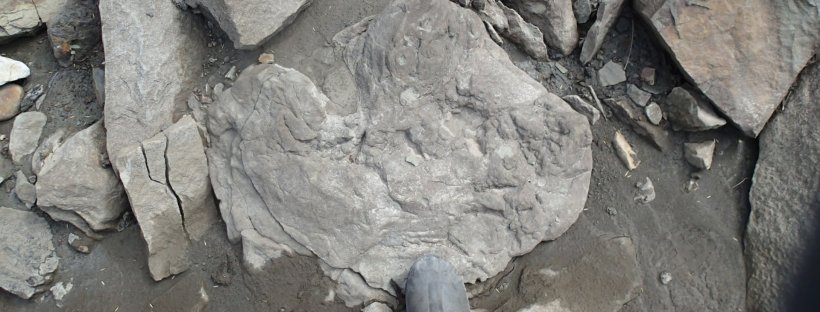
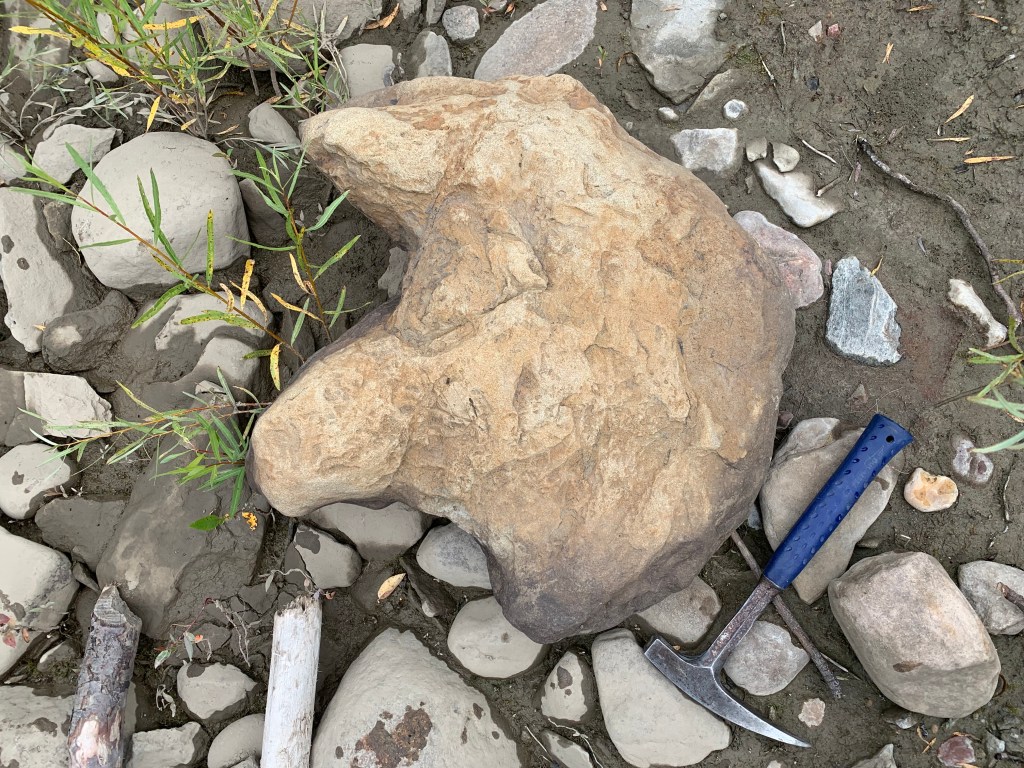
During July and August, BADP collected several large, three-toed hadrosaur tracks from various sites across northwestern Alberta. These tracks are isolated natural casts of footprints that infilled the original track and weathered out of situ. Some of these tracks were carried out of the site by hand across rushing rivers much to the chagrin, all be it temporary, by the team. Studying these tracks will allow the BADP team to learn more about the kinds of environments these dinosaurs were walking through and the taphonomy and different preservation of the tracks.

Large hadrosaur track with a rock hammer for scale, surrounded by grass and mud covered stones

Images provided by Jack Milligan and Emily Bamforth.

Written by Jack Milligan

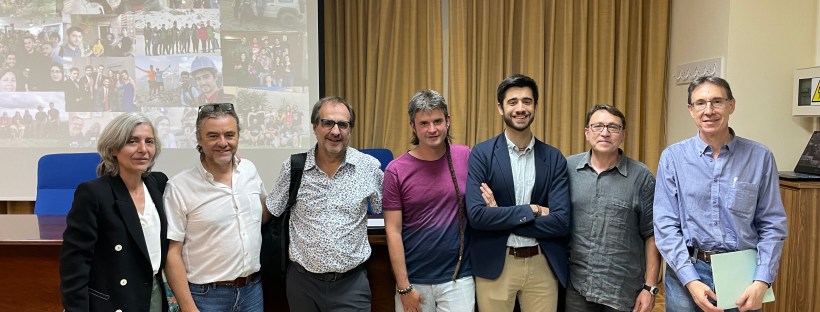
Manuel Pérez-Pueyo, Doctor of Science from the University of Zaragoza

Ichnoplanet would love to congratulate Dr. Manuel Pérez-Pueyo on his successful Ph.D. thesis defense at the University of Zaragoza, Zaragoza, Spain. His thesis is titled; “Contributions of the Tremp Fm (upper Maastrichtian) in Ribagorza (Aragonese Pyrenees, Huesca) to the knowledge of finicretaceous vertebrate communities on the Ibero-Armorican island.” Our own Luis Buatois was an external supervisor of this research. You can read more about Dr. Manuel Pérez-Pueyo’s research here.

We’re excited to hear about this outstanding accomplishment, and can’t wait to see where Manuel goes next!

Written by Jack Milligan

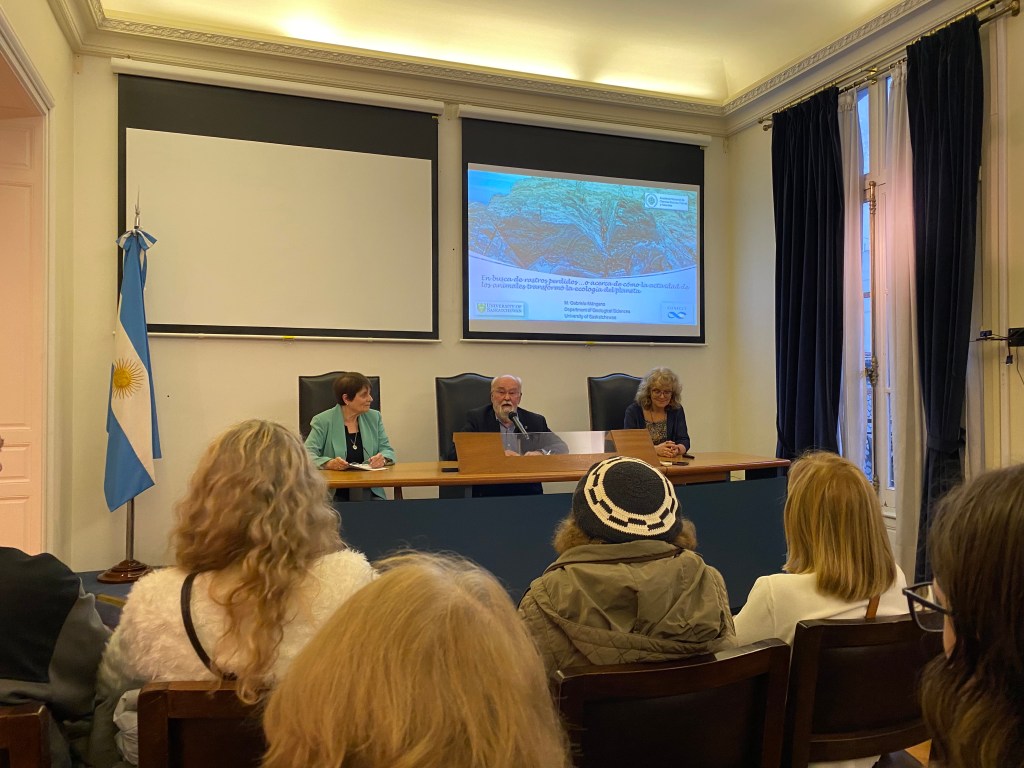
Dr. Mángano named Corresponding Member of the Academy of Sciences of Argentina

Congratulations to our own Dr. Gabriela Mángano on becoming a Corresponding Member of the National Academy of Exact, Physical, and Natural Sciences of Argentina. The goal of the Academy of Sciences of Argentina is to promote the development and dissemination of exact, physical, and natural sciences in Argentina, including their technological applications to further the scientific progress of Argentina and its collaborators abroad. We’re happy to have Gabriela represent our research group as part of this collective group of researchers from Argentina and around the world.

You can learn more about the ANCEFN at their website.

Written by Jack Milligan

Congratulations to Romain!

Last week, our own Romain Gougeon successfully defended his Ph.D. thesis! Romain has worked very hard to achieve this milestone, so big congratulations to him! His thesis focused on integrating sedimentologic and ichnologic datasets to learn more about the evolution of early metazoans from the latest Ediacaran and earliest Cambrian Chapel Island Formation of Newfoundland, Canada. During his research, he and his collaborators have published a series of papers on this topic, much of which you can find on his profile, and on our publication page here.

We look forward to hearing more about your future research, and congratulations once again to now Dr. Romain Gougeon!

Romain Gougeon, Luis Buatois, Gabriela Mangano, and Guy Narboone conducting remote fieldwork in Newfoundland, Canada.

Written by Jack Milligan