A new paper was published in Nature Ecology and Evolution by Dr. Claire Browning and co-authors, including our own Dr. Gabriela Mángano and Dr. Luis Buatois, examining trace fossils of a meiofaunal ecosystem that flourished in the immediate aftermath of the end-Ordovician extinction event (444 million years ago).
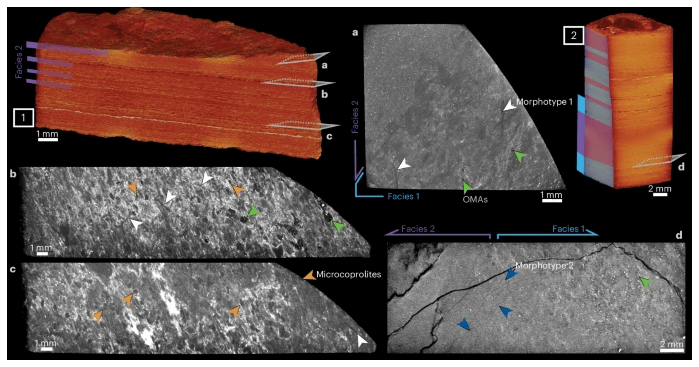
The trace fossils studied in this paper come from the Soom Shale Lagerstätte, South Africa. Three-dimensionally preserved ichnofossils, including two burrow/trail morphotypes and microcoprolites, were scanned using micro-computed tomography. These trace fossils are attributed to a low-diversity meiofaunal benthic community, dominated by nematodes and foraminifera. The ichnofossils are preserved in and consistently occur within fossilized marine-snow-bearing beds. Marine snow describes episodic deposition of organic material, including phytoplankton and phytodetritus, generated when wind-blown dust particles are then bound together with phytoplankton blooms in the surface water. The Soom Shale Lagerstätte provides a remarkable insight into one of the oldest meiofaunal trace-fossil records, and the earliest account of an ancient behavioural response to episodic marine snow deposition.
Occurrence and distribution patterns of trace fossils, microcoprolites, and organomineralic aggregates within distinct laminae. Figure 4 from Browning et al., 2025.
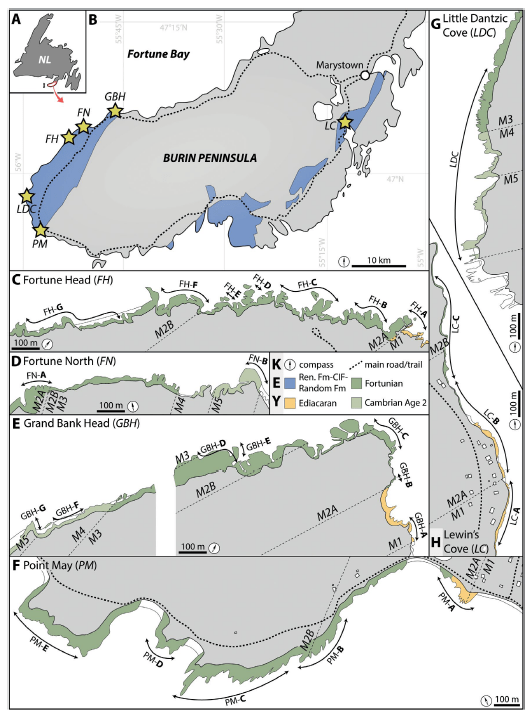
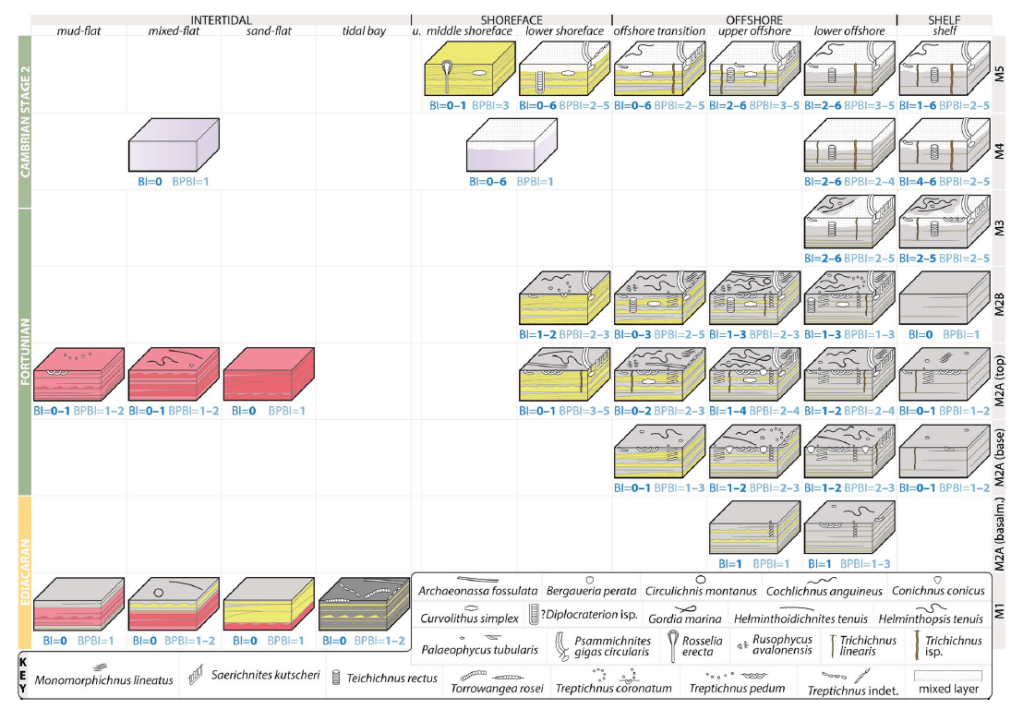
Dr. Romain Gougeon, Dr. Gabriela Mángano, Dr. Luis Buatois, Dr. Guy Narbonne, Dr. Brittany Laing, and Dr. Maximiliano Paz have just published their research on bioturbation at the onset of the Cambrian Explosion within the monograph series Fossils and Strata. This is the culmination of 4 field seasons that took place from 2016 to 2021 at the Cambrian-type section in Newfoundland. The monograph consists of a comprehensive ichnotaxonomic review that is essential to understanding the Cambrian explosion from a trace-fossil perspective.
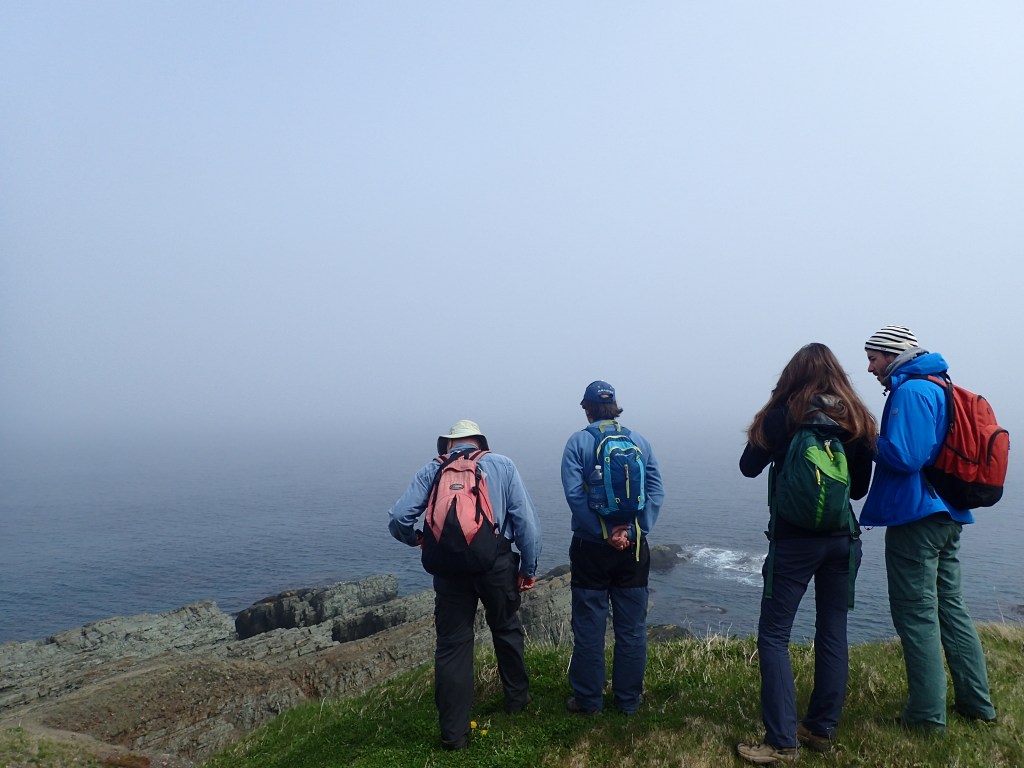
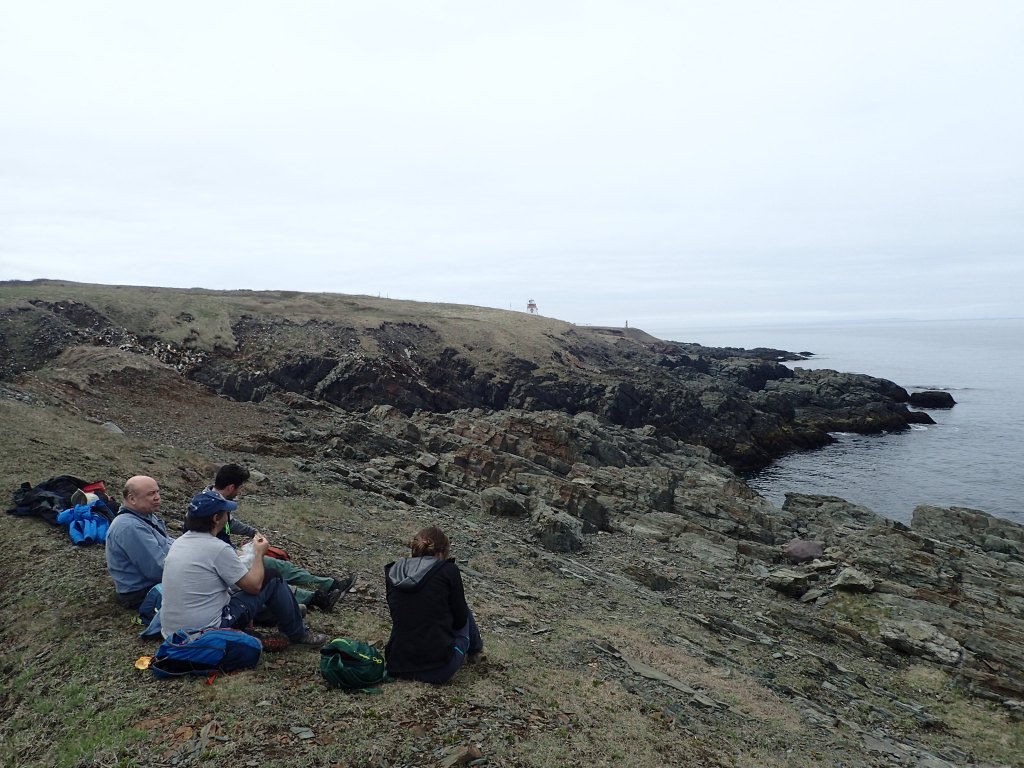
Romain Gougeon and colleagues conducting fieldwork in Newfoundland, Canada. See Fossils and Strata for open access monograph.
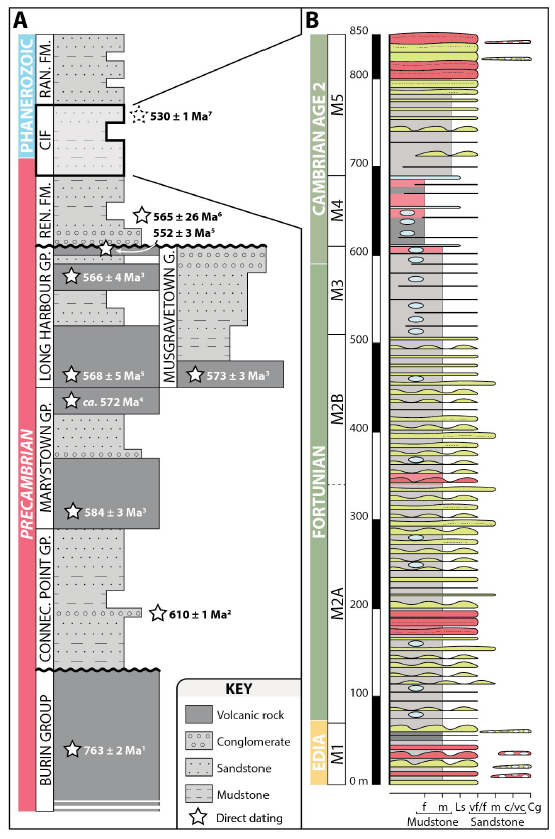
The Chapel Island Formation is a 1000+ m-thick, mainly siliciclastic succession that is well-exposed in coastal cliffs of Burin Peninsula, southeastern Newfoundland, eastern Canada. This unit contains an outstanding record of the transition from the Ediacaran (635–538 Ma) to the Cambrian (538–487 Ma). Fossils from the Chapel Island Formation include an incredible diversity of trace fossils, with some intervals rich in small shelly fossils. The monograph integrates sedimentologic and ichnologic information for the whole formation, reinforces the status of the current Cambrian Global Stratotype Section and Point for the Cambrian System, and advocates for the need for more comprehensive and multi-disciplinary approaches and studies to fully decipher the scale, tempo, and loci of the early evolution of animal life on Earth.
Congratulations to Romain and the team on this incredible achievement! You can check out Romans’ ResearchGate profile here, where you can read other studies he’s authored on the Chapel Island Formation throughout the years. These include the origin of the shelf sediment mixed layer and the impact of outcrop quality on trace fossil datasets.
Dr. Buatois was featured in a new Nature article, where he commented on recent work done by the Palaeoburrows Project based at the Federal University of Rio Grande do Sul in Porto Alegre, Brazil.
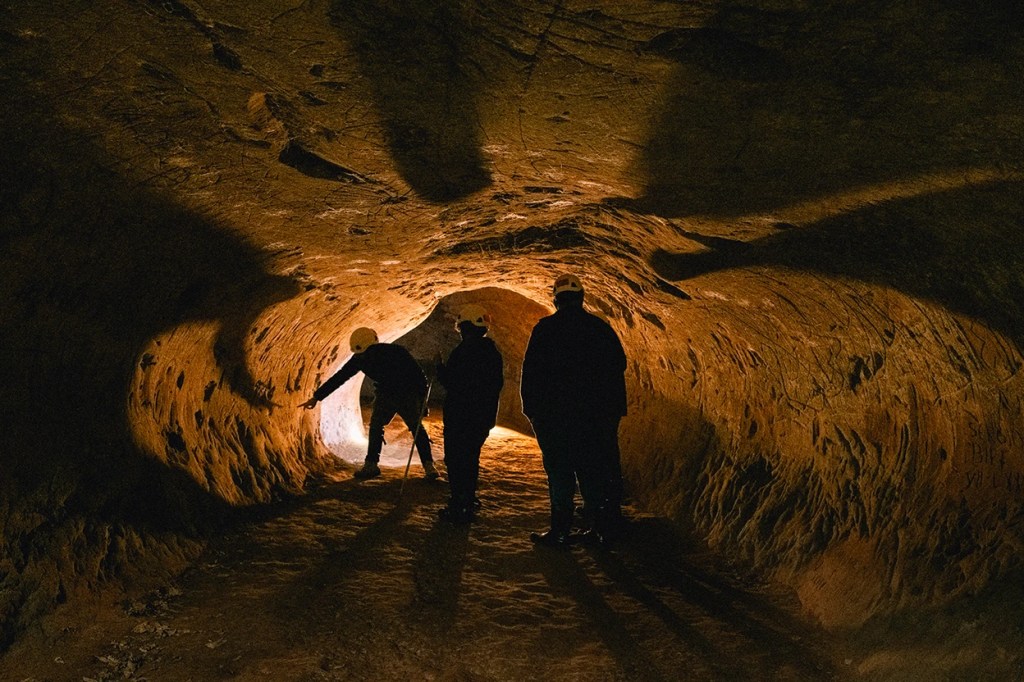
In conjunction with the University of the Extreme South of Santa Catarina (UNESC) in Criciúma, Brazil, paleontologists and archaeologists have been studying a series of massive caves that have had multiple architects and inhabitants during the Pleistocene. The caves are found within a consolidated eolian sandstone unit of the early late Cretaceous Botucatu Formation (100 Ma). This makes the sandstone soft enough to burrow through and consolidated enough that the caves wouldn’t collapse.
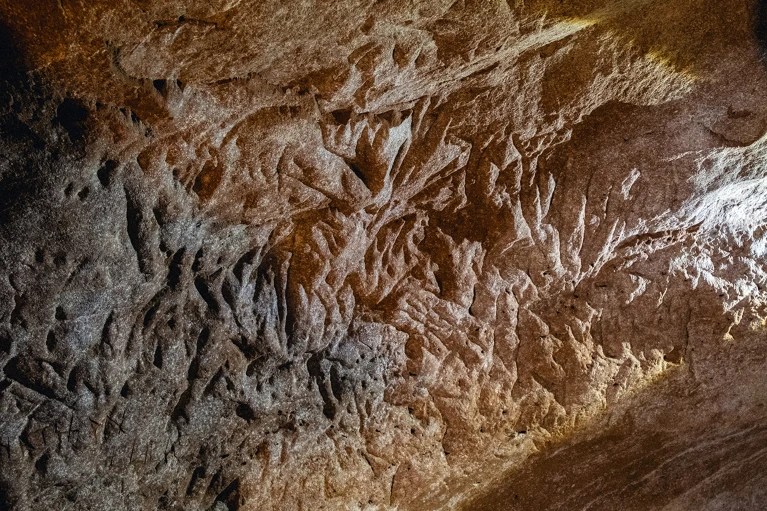
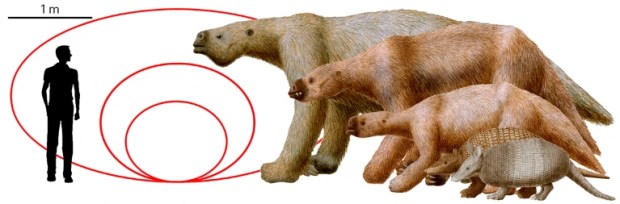
The walls of the caves preserve large claw-like markings, as well as inscriptions and graffiti by ancient and modern humans, respectively. The large claw-like marks on the walls of the cave point to the original inhabitants of the cave, proposed to be giant ground sloths. They would construct these burrows for multiple reasons, including potentially to sharpen their claws and to seek refuge from megafaunal predators.
These would be not only the largest palaeoburrows, but the largest trace fossils known so far. From this research, a novel ichnogenera and two novel ichnospecies were named, Megaichnus minor and Megaichnus major. These palaeoburrows are so far known from Brazil and Argentina, and are attributed to giant ground sloths like Scelidotherium and Glossotherium. Work is ongoing to refine the classification scheme for palaeoburrows, conservation, and opportunities for international collaboration on future studies.
Paleoartist reconstruction of extinct giant ground sloths and armadillos by Renato Pereira Lopes.
You can read the original study in Ichnos and the news feature in Nature. Listen to a Radio-Canada interview (in French) where PhD student Dmitri Ponomarenko comments on these spectacular paleoburrows here.
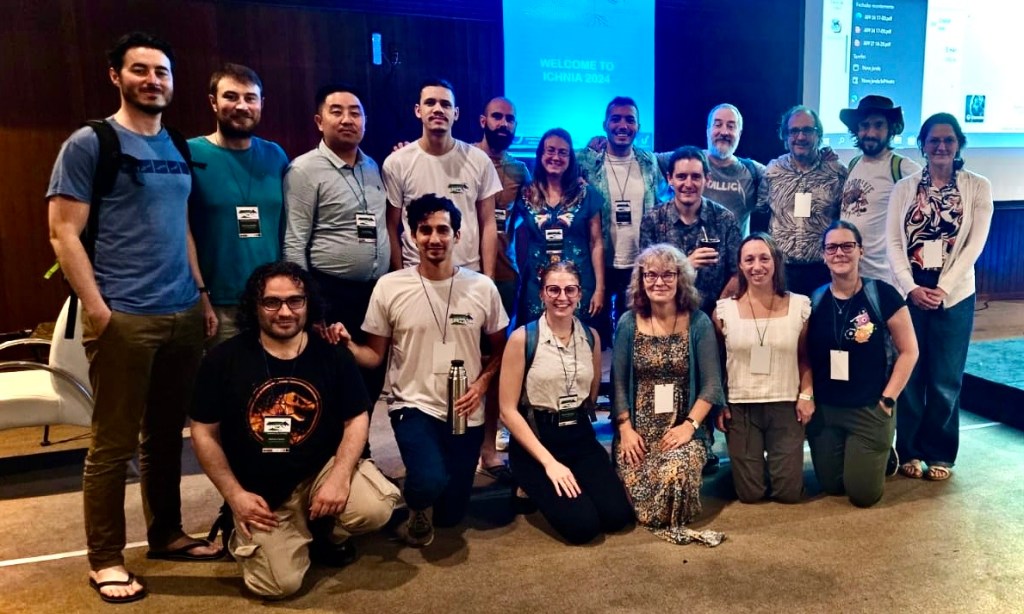
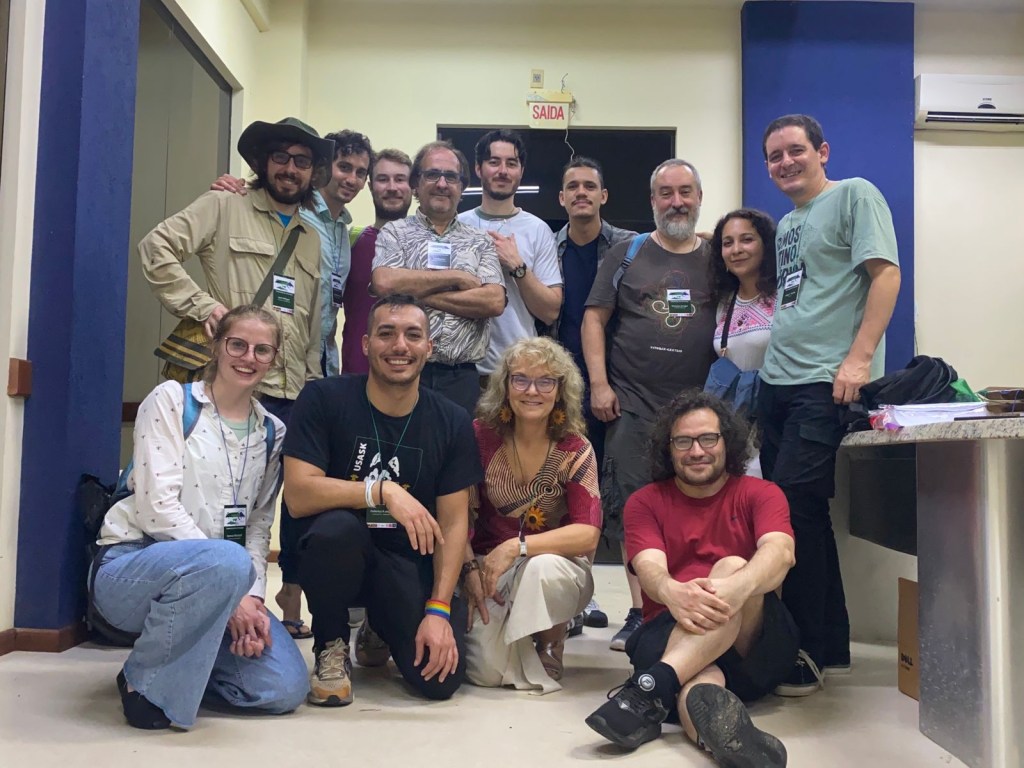
ICHNIA 2024 was a success! Several current and former Ichnoplanet students journeyed to Florianopolis, Brazil, to present their latest research on trace fossils, sedimentology and paleobiology.
Jack Milligan and Cecilia Pirrone presented their research on reconstructing the taphonomic pathway of turtle fossils from the transitional marine sediments of the early Paleocene Salamanca Formation of Chubut, Argentina that have been bioeroded by alligators, beetles, leeches and barnacles.
Jessica Morstad had a poster going over imaging techniques and the response of benthic organisms within submarine canyons from the Barkley Canyon in the northeastern Pacific Ocean off the coast of British Columbia, Canada.
Luis Buatois presented research on the ichnological signatures at mass extinction boundaries to quantify and qualify evolutionary trends in trace fossils at and across major mass extinction events and the rate of recovery of ichnodiversity following these events.
Gabriela Mángano presented on using the Burgess Shale-type high-density, low-diversity trace-fossil assemblages at Marble Canyon, middle Cambrian Thick Stephen Formation to study the penetrative bioturbation of Burgess Shale-type deposits.
Alejandro Garcia-Corrales had a poster exploring the ichnofauna of surficial epifauna and shallow-tier infauna from the lower Cambrian Cranbrook Lagerstätte from the Eager Formation of British Columbia, Canada, where the ichnofauna is dominated by worm burrows and, to a lesser extent, arthropod trackways.
Martin Farina and Verónica Krapovickas had a poster proposing the concept of an ecoichnotype for avian footprints, accounting for morphological variability and body mass estimates to ascertain paleoecological and paleoenvironmental details.
Romain Gougeon presented his research on the paleoecology of ichnofaunas in the early Paleozoic by analyzing the occurrences, morphology, and bioturbation indices to reveal global trends in evolutionary radiations that led to the establishment of the Phanerozoic paleosphere. Romain won the award for best oral presentation!
Anthony Shillito and Romain Gougeon presented their recent work on the significance of outcrop morphology and the use of true substrates in ichnological research by looking at bedding plane surfaces, and the physical shape and structure of geological exposures as they relate to trace fossils.
Federico Wenger gave a presentation on his research into the paleoecology and paleoenvironmental implications of the shallow-marine lower Devonian Talacasto Formation in the Central Precordillera in western Argentina, incorporating paleoenvironmental controls and sedimentology to determine ichnofacies trends.
Maximilliano Paz and Patricio Desjardins proposed a method to estimate the intensity of bioturbation in the mixed layer of mud-rich successions by looking at the degree of bioturbation to improve ichnofabrics descriptions and transitions between successions of ichnocoenoses.
Mariano Arregui and Verónica Krapovickas presented exceptionally well-preserved large-sized burrows from the Pleistocene of Necochea, Buenos Aires, Argentina, thought to have been produced by pampatheres based on the size of the burrows and phenetic correlation of claw marks with the anatomy of the forelimb.
Mariano Arregui also presented on subsurface bioturbation and bioerosion structures in core samples from external storm-influenced estuarine deposits from the Springhill Formation, Austral-Magallanes Basin, Tierra del Fuego, Argentina.
Sudipta Dasgupta was a coauthor on a presentation looking at the ichnological response to the Eocene hyperthermal events from the onshore deposits of the Kutch Basin, western India, which acted as stressors controlling the distribution and benthic dynamics of successive Eocene ichnocoenoses.
Verónica Krapovickas had a presentation on the behaviour, paleoecology, and locomotion dynamics of early mammals and early dinosaurs based on trackways from the middle Jurassic La Matilde Formation, Patagonia, Argentina.
Nicolas Minter and Lijun Zhang worked with Luis and Gabriela on a presentation on the infaunal response to environmental extremes during critical intervals of deep time using trace fossil evidence during the End-Permian mass extinction event.
Diego Muñoz proposed refining the stratigraphy of Cruziana by using transitional ichnotaxa Cruziana semiplicata and Cruziana rugosa groups from the Central Andean Basin, northwestern Argentina using trace fossil and trilobite body fossil evidence.
Maximiliano Paz presented a poster looking at the ichnofauna of a delta complex from the Cambrian-Ordovician Los Cabos Group, Asturias, Spain, identifying two distinct trace fossil assemblages including storm and flood-influenced assemblages. He also presented the deep-sea trace fossil Lingulichnus verticalis from the upper Ordovician proximal turbidite deposits of Asturias, Spain, and associated brachiopod body fossils.
Noelia Carmona coauthored a presentation on the analysis of Mole Cricket burrows and their implications for understanding substrate moisture changes on preservation and morphology.
Congratulations to everyone on the amazing and informative oral presentations and posters, the contributions of current and former Ichnoplanet students made the conference much better. Thanks to the organizers and committees that made ICHNIA 2024 possible! One ichnology!
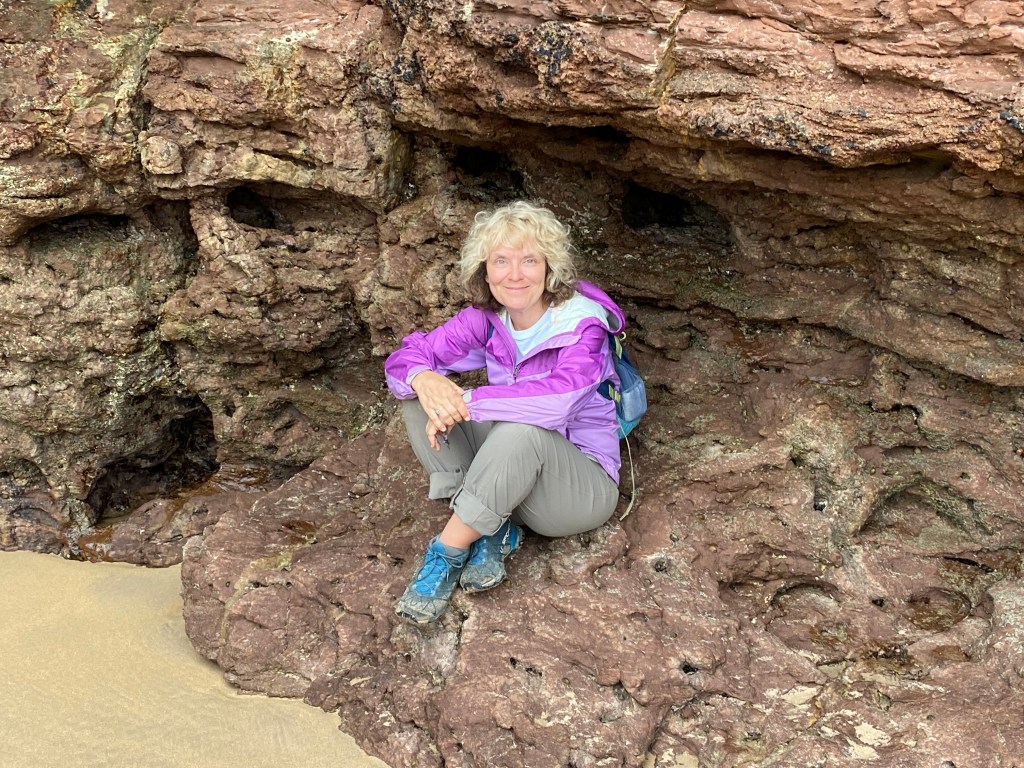
We are excited to share that our own Dr. Gabriela Mángano has been named a distinguished professor by the University of Saskatchewan Distinguished Professorship Advisory Committee.
She was recognized for her breadth of contributions in the areas of ichnologic and sedimentological research on an international scale. She has mentored and supervised many students, many of whom are underrepresented in the geosciences, including women and minority groups. Congratulations Gabriela on this amazing achievement!
She also received the award for Outstanding Educator Award from the Association for Women Geoscientists back in 2018.




 ichnoplanet.ca