
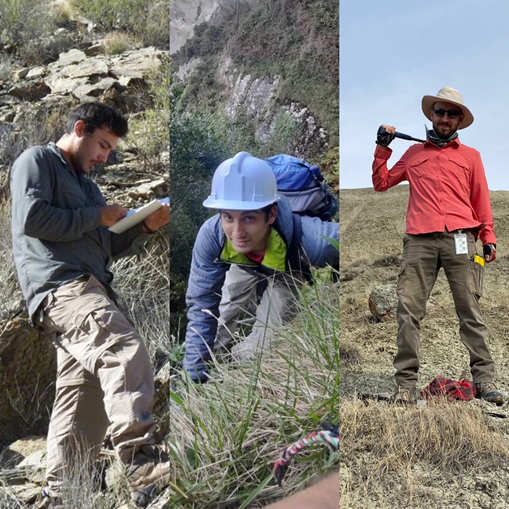
Dr. Maximiliano Paz has received the International Association of Sedimentologists (IAS) Postdoctoral Research Grant. He is currently studying the sedimentology and ichnology of the Cambrian-Ordovician Los Cabos Series. These funds will be used to cover one month of fieldwork expenses to log 4000 m of the succession in the rocky cliffs of western Asturias, Spain.
Jack Milligan has received the IAS Judith McKenzie Fieldwork Award. He is studying the sequence stratigraphy and taphonomy of dinosaur bones including describing osteic bioerosion trace fossils from the latest Cretaceous Frenchman Formation. This funding will cover fieldwork expenses to measure coastal floodplain and fluvial outcrops along the Frenchman River Valley of southwestern Saskatchewan.
Federico Wenger also received the IAS Judith McKenzie Fieldwork Award. He will be studying the sequence stratigraphy and ichnology including the degree of bioturbation, ichnodisparity, and ichnodiversity to understand the different environmental zones of the Devonian Talacasto Formation, in the geological province of Precordillera, western Argentina. This funding will help finance the trip to the study area.
Congratulations to Maximiliano, Jack, and Federico, and best of luck with your fieldwork, and thank you to the International Association of Sedimentologists for helping fund Ichnoplanet research at USask!
Written by Jack Milligan




 ichnoplanet.ca