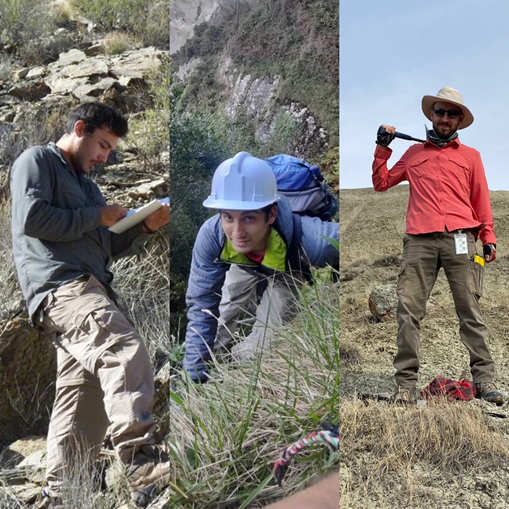
Three Ichnoplanet students at the University of Saskatchewan receive awards from the International Association of Sedimentologists!

Dr. Maximiliano Paz has received the International Association of Sedimentologists (IAS) Postdoctoral Research Grant. He is currently studying the sedimentology and ichnology of the Cambrian-Ordovician Los Cabos Series. These funds will be used to cover one month of fieldwork expenses to log 4000 m of the succession in the rocky cliffs of western Asturias, Spain.

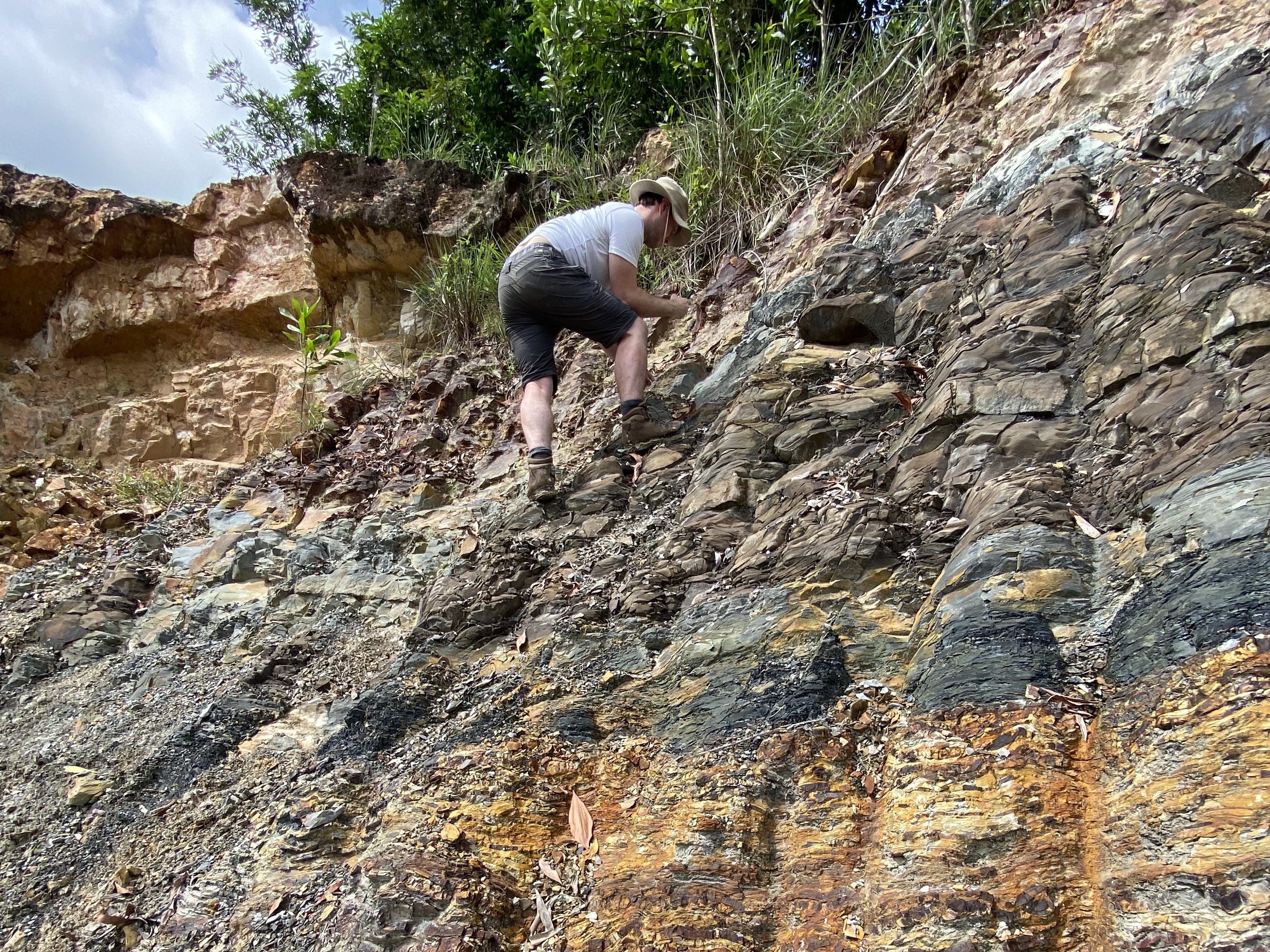
Jack Milligan has received the IAS Judith McKenzie Fieldwork Award. He is studying the sequence stratigraphy and taphonomy of dinosaur bones including describing osteic bioerosion trace fossils from the latest Cretaceous Frenchman Formation. This funding will cover fieldwork expenses to measure coastal floodplain and fluvial outcrops along the Frenchman River Valley of southwestern Saskatchewan.

Federico Wenger also received the IAS Judith McKenzie Fieldwork Award. He will be studying the sequence stratigraphy and ichnology including the degree of bioturbation, ichnodisparity, and ichnodiversity to understand the different environmental zones of the Devonian Talacasto Formation, in the geological province of Precordillera, western Argentina. This funding will help finance the trip to the study area.

Congratulations to Maximiliano, Jack, and Federico, and best of luck with your fieldwork, and thank you to the International Association of Sedimentologists for helping fund Ichnoplanet research at USask!

Written by Jack Milligan

Dr. Anthony Shillito receives Banting Postdoctoral Fellowship to conduct research at USask on animal aquatic-terrestrial transition

Dr. Anthony Shillito from the University of Oxford, England, is one of the recent recipients of the Banting Postdoctoral Fellowship, which allows exceptional scholars to continue their research with the help of federal funding.

Dr. Shillito’s project at the University of Saskatchewan will be focused on understanding why animals began the transition from marine to terrestrial, and the factors that may have played a part in establishing terrestrial faunal communities. He has previously conducted fieldwork looking into this research question in places such as the United Kingdom, Australia, and the Canadian Arctic. His work will look at this transition through the perspective of the trace fossil record including burrows and trackways, including analysis of the sedimentology associated with these important fossils. Congratulations on receiving this prestigious award Anthony, we are excited to have you join our research group!

You can read more of Dr. Shillito’s research on his ResearchGate page!

Written by Jack Milligan

Associated champsosaur skeleton in southwest Saskatchewan discovered by Jack Milligan

Following the K-Pg mass extinction event which wiped out the non-avian dinosaurs, the swamps and floodplains of southwest Saskatchewan were populated by an assortment of small to medium-sized vertebrates including turtles, crocodiles, early mammals, and a now-extinct group of semi-aquatic reptiles known as champsosaurs. During a joint research expedition near the town of Climax, Saskatchewan by the Royal Saskatchewan Museum and Carleton University in Ottawa in August 2020, an associated skeleton of a champsosaur was recovered by Jack Milligan. The champsosaur was collected in a terrestrial shale horizon around 3 m above the K-Pg boundary, from the Paleocene-aged Grey facies of the Ravenscrag Formation. The Grey facies records a low-energy, vegetated swamp environment. 

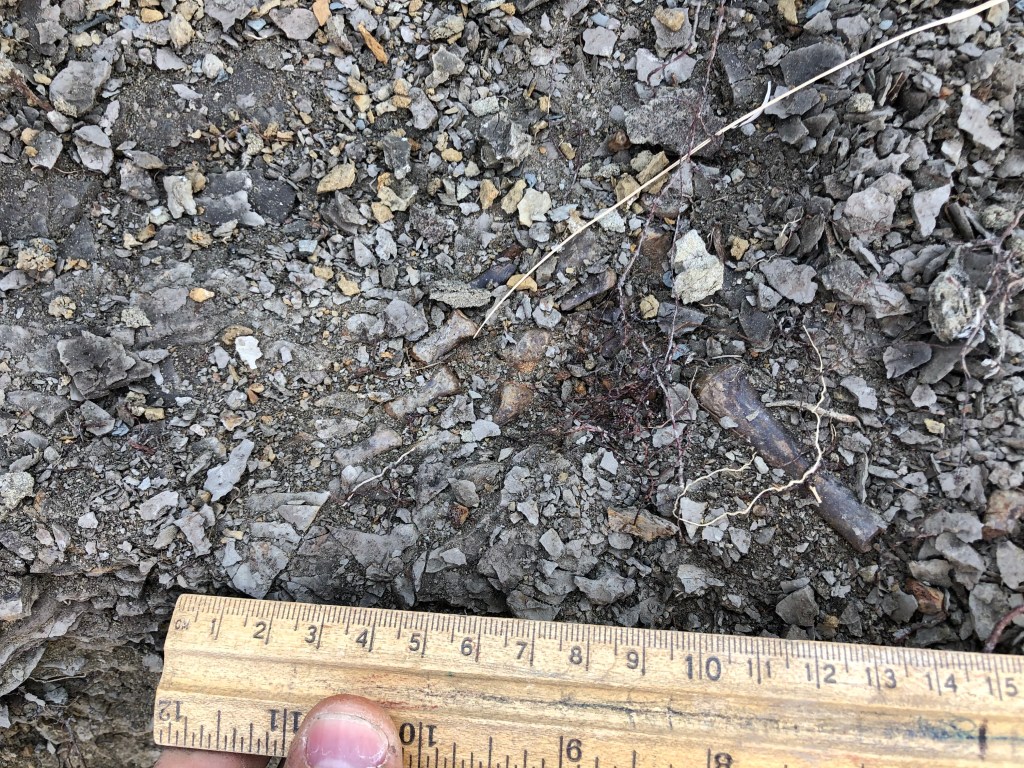
Champsosaur hind foot (middle right in image). Photo by Jack Milligan.

This skeleton is between 35-40% complete and is comprised of several dorsal and caudal vertebrae with intact neural arches and transverse processes, incomplete bones from all four limbs including a humerus and femurs, dozens of ribs, and several elements making up the pectoral and pelvic girdles. Numerous gastralia as well as a near complete hind foot were found in situ upon examination of the shale horizon from which the bones had eroded out. More fieldwork is needed to try and recover cranial material to affirm an accurate taxonomic identification of this specimen.

You can read more about the discovery in this Usask news article.

Written by Jack Milligan

Note: Jack recently joined the ichnofamily at Usask as an M.Sc. student! You can read more about him on his ichnoplanet profile, or follow him on ResearchGate or Twitter. –Brittany

Charlie Zheng secures a Student Research Award in Planetary Habitability!

We’re pleased to share that our colleague Charlie Zheng, Ph.D. candidate at the University of Texas Austin, was just awarded a Student Research Award in Planetary Habitability!

The award is distributed by the UT Center for Planetary Systems Habitability and consists of $24,960. It is a well deserved award which will allow Charlie, along with project collaborators Dr.’s Buatois & Màngano, to continue their fascinating research into the resilience of marine infaunal communities. Charlie describes the project as:

“Trace fossil records are the best indicator of habitability in harsh environments after mass extinctions or during the early evolution of life on earth. In fact, oceanic anoxia is a common theme linked to major environmental perturbations and ancient oceans that hosted early metazoan life ordinarily contained low oxygenations. A comprehensive dataset documenting marine infaunal communities under oxygen-deficient environments from different settings and geologic ages is necessary to better understand the habitability of environments. Moreover ichnology should play an essential role in the search for evidence of early lifeform in other worlds, especially under similar environmental conditions.

The Cretaceous Maverick intrashelf basin is one of the world’s best examples of a shallow marine shelf ecosystem impacted by locally developed anoxia, creating “dead zones” that evolve into shallow basins within the shallow-water shelf. This project aims to integrate ichnologic and sedimentological signatures to characterize distinctive infaunal communities under hostile, oxygen-limited conditions and assess the resilience of marine infaunal communities and the carbonate factory ecosystem evolution across the environmental perturbation. This study will extend the existing ichnologic database in oxygen-deficient settings by providing the first case study on the intrashelf basin lacking modern analogs and serve as an needed update on the subject since the 90’s, when relevant studies were most abundant.” 

Panoramic photograph of an outcrop from the Del Norte area, Devils River State Natural Area, Texas. This outcrop shows the more proximal shallow-water platform facies & architecture of the basin. The awarded research will focus on more distal portions of this same basin. (photo by Charlie Zheng)

A big congratulation’s to Charlie on this accomplishment!! We can’t wait to read about the results of this research!

You can follow Charlie’s research via his Research Gate profile.

Written by Brittany Laing

Large wild boar tracks discovered in SW Spain

Recent research by colleagues, including former visiting researcher Dr. Belaústegui and former postdoc Dr. Muñiz, has been featured in the Spanish newspaper El País. Their research, first published in Palaois, examines large wild boar tracks from the Late Pleistocene of Huelva, Spain. The novel ichnogenus and ichnospecies (Suidichnus galani igen. and isp. nov.) described in their article are the first published record of fossil suid tracks. The ichnogenus is named after the family Suidae while the ichnospecies name is a nod to José María Galán, a respected local tracker who discovered the trackways (and many more in the formation).

Footprint 'Suidichnus galani' found in Matalascañas.
Paratype of Suidichnus galani igen. and isp. nov., vertically oriented. (Fig. 3 in Neto De Carvalho et al., 2020)

The large size of these tracks, and the boars themselves, are a divergence from the overall trend of the species towards smaller size. The authors delve into the cause of this divergence and suggest that the increase in size was an adaption to either an increase in predation pressure and/or a resource bonanza.

The article in El País is a fantastic piece of science communication and we highly recommend you give it a read! While the text is originally in Spanish, the Google Translate function on Google Chrome produced a good English translation.

Written by Brittany Laing