Pichipoda manganae, a new armadillo trackway from the Neogene of Argentina.

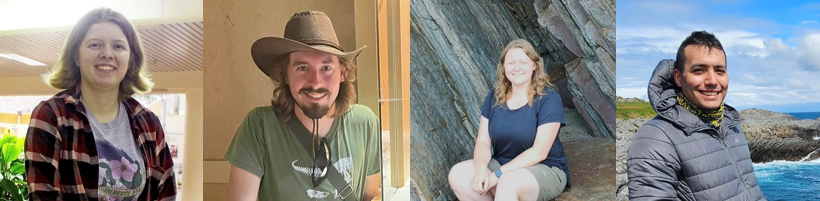
Former Ichnoplanet students Martín Farina, Verónica Krapovickas and co-authors have published a study on mammalian trackways from the Neogene Vinchina (Middle to Late Miocene) and Toro Negro (Late Miocene to Early Pleistocene) formations, in the La Rioja Province Vinchina Basin, Argentina!

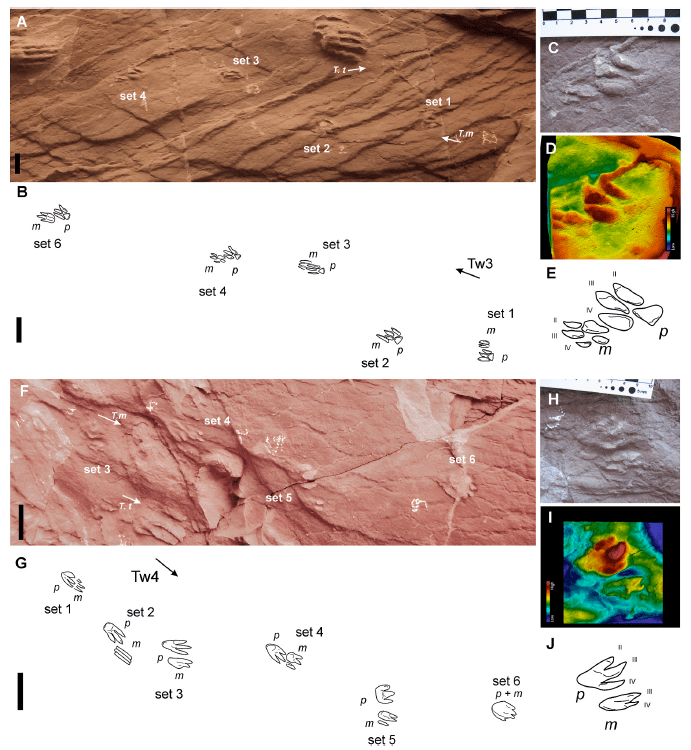
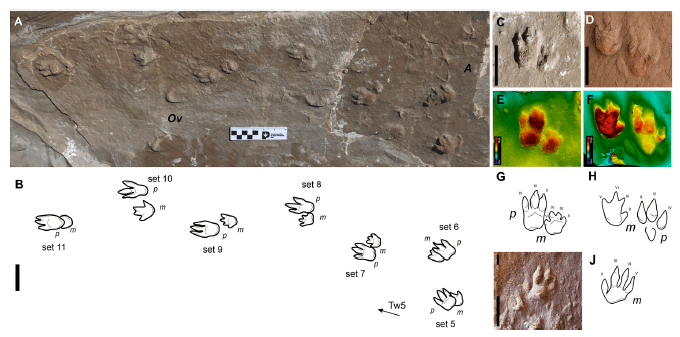
Northwestern Argentina has an outstanding ichnological record of the Cenozoic vertebrate faunas. This study reports five mammalian trackways and the diversity of the trackmakers responsible. Of the four ichnospecies identified, three are new. The trackways come from deposits interpreted as floodplains of both meandering and anastomosed fluvial systems.

Pichipoda is a novel ichnogenus that has a didactyl to monodactyl manus and tridactyl mesaxonic pes impressions with robust digits with blunt tips. Two ichnospecies are assigned to Pichipoda, including P. manganae and P. vizcainoi. P. manganae (P. manganaei) is the largest ichnospecies of Pichipoda and has a didactyl manus, and the manus of P. vizcainoi shows an almost monodactyl morphology. Tridactylonicha marsicanae is another novel ichnogenera and ichnospecies, described by a tridactyl to didactyl paraxonic manus and tridactyl mesaxonic pes impression with long, slender, and pointed tips of the toe impressions. Dolichotichnus marae has tetradactyl paraxonic manus and tridactyl mesaxonic pes impressions.
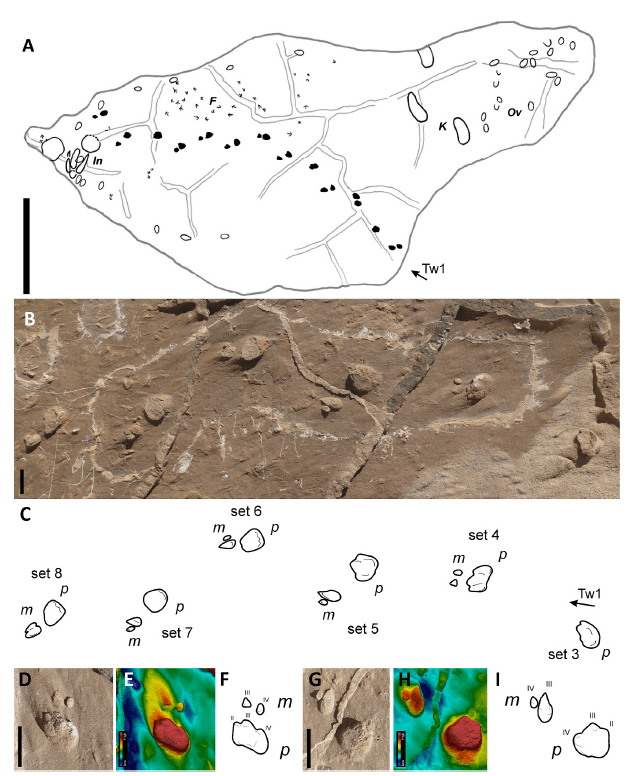
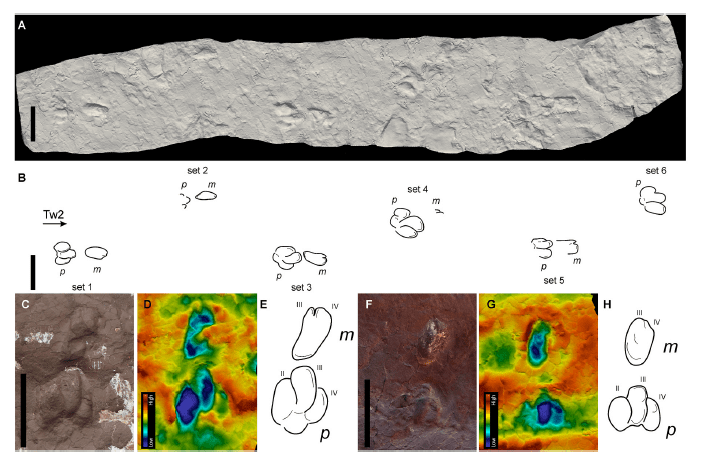
P. manganae and P. vizcainoi are interpreted as being produced by armadillos, with P. vizcainoi being attributed most likely to tolypeutines. Before this study, ichnofossils attributable to fossil armadillos were unknown, meaning this is the beginning of our understanding of the trace fossil record of this group and can help us to ask further paleobiological questions. T. marsicanae is interpreted as being produced by hegetotheriids, a family belonging to the extinct group of South American ungulates, the Notoungulata. D. marae is most likely produced by dolichotines, a group of caviid rodents.

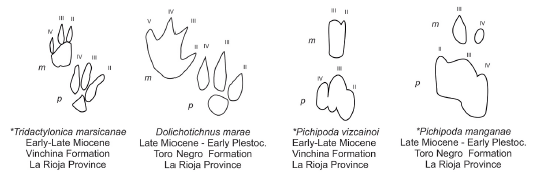
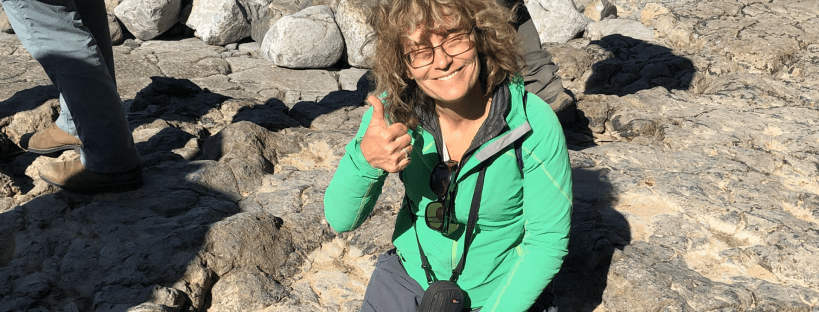
Astute readers will notice the etymology of P. manganae honours our very own Dr. Gabriela Mángano, which we here at Ichnoplanet firmly endorse. The contributions Dr. Mángano has made to ichnology are unmatched, and it is fitting that these newly described trace fossils act as a reflection and reminder of her great career.

Congratulations to the authors, including Martin and Verónica, on this amazing study. We know the continued research into the small mammal trackways of Cenozoic Argentina is filling in an important gap in our understanding of vertebrate faunas within South America, and we await what new discoveries have to say.

Read the paper in the Journal of South American Earth Sciences here.

Written by Jack Milligan
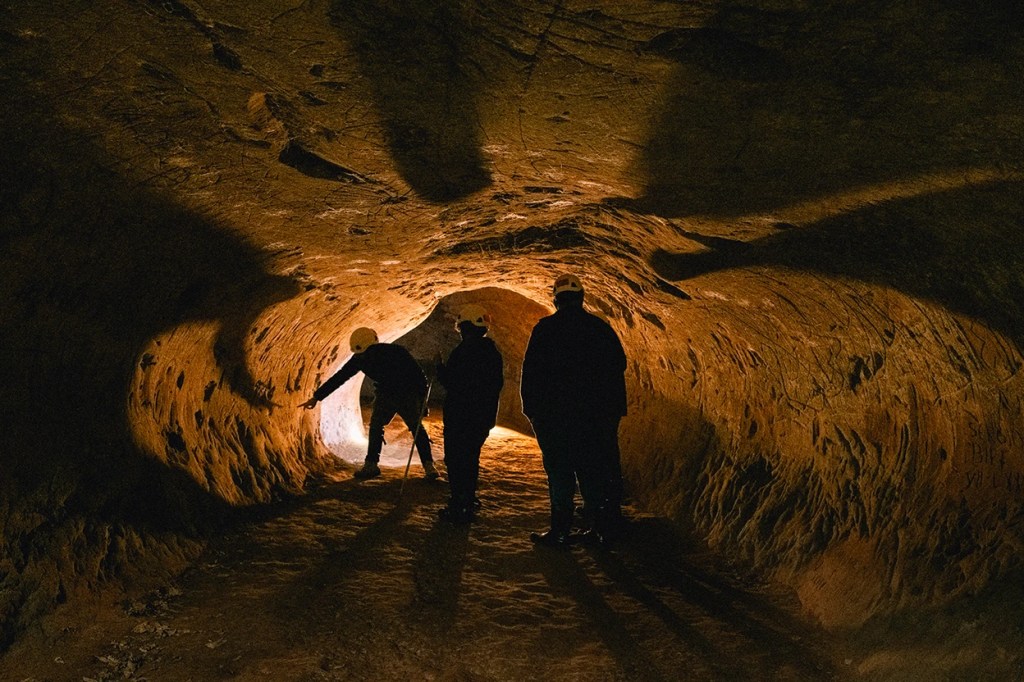
Giant ground sloths made massive paleoburrows in Brazil

Dr. Buatois was featured in a new Nature article, where he commented on recent work done by the Palaeoburrows Project based at the Federal University of Rio Grande do Sul in Porto Alegre, Brazil.

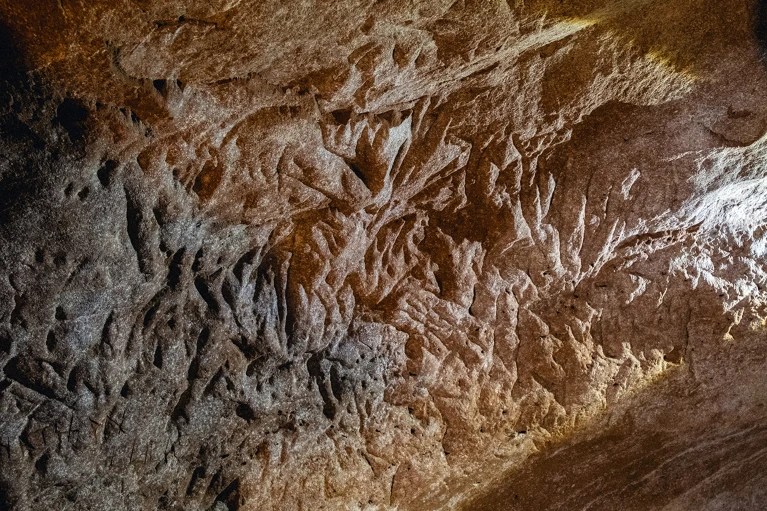
In conjunction with the University of the Extreme South of Santa Catarina (UNESC) in Criciúma, Brazil, paleontologists and archaeologists have been studying a series of massive caves that have had multiple architects and inhabitants during the Pleistocene. The caves are found within a consolidated eolian sandstone unit of the early late Cretaceous Botucatu Formation (100 Ma). This makes the sandstone soft enough to burrow through and consolidated enough that the caves wouldn’t collapse.

The walls of the caves preserve large claw-like markings, as well as inscriptions and graffiti by ancient and modern humans, respectively. The large claw-like marks on the walls of the cave point to the original inhabitants of the cave, proposed to be giant ground sloths. They would construct these burrows for multiple reasons, including potentially to sharpen their claws and to seek refuge from megafaunal predators.

These would be not only the largest palaeoburrows, but the largest trace fossils known so far. From this research, a novel ichnogenera and two novel ichnospecies were named, Megaichnus minor and Megaichnus major. These palaeoburrows are so far known from Brazil and Argentina, and are attributed to giant ground sloths like Scelidotherium and Glossotherium. Work is ongoing to refine the classification scheme for palaeoburrows, conservation, and opportunities for international collaboration on future studies.

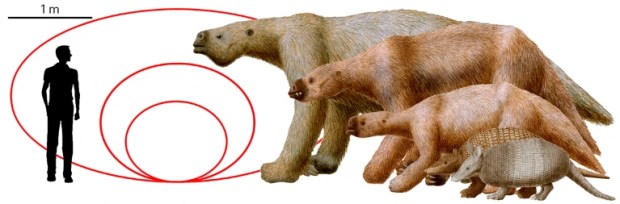
Paleoartist Renato Pereira Lopes’ reconstruction of several extinct ground sloths and armadillos and schematic representations of the dimensions of some caves found in South America. Artist credit to Renato Pereira Lopes as seen in Nature https://www.nature.com/articles/d41586-025-00216-x

Paleoartist reconstruction of extinct giant ground sloths and armadillos by Renato Pereira Lopes.

You can read the original study in Ichnos and the news feature in Nature. Listen to a Radio-Canada interview (in French) where PhD student Dmitri Ponomarenko comments on these spectacular paleoburrows here.

Written by Jack Milligan
Congrats to Ichnoplanet masters students!

We have had a busy summer, and we want to start by congratulating Jack Milligan, Kaitlin Lindblad, Federico Wenger, and Kathrine Thue for successfully defending their M.Sc. theses!

Jack studied the depositional context of bioeroded dinosaur bones from the upper Cretaceous of Saskatchewan; Kaitlin studied the biogeography, environment and paleoecology of crocodylians from the northern plains; Federico studied the ichnodiversity and bioturbation of Devonian shallow marine deposits in Argentina, and Kathrine studied the sedimentology and ichnology of Silurian-Devonian deposits in Asturias, Spain.

Once again, congrats to these new masters of ichnology!

Written by Jack Milligan

Ichnoplanet collaboration with the Museo Paleontológico Egidio Feruglio in Trelew, Argentina!

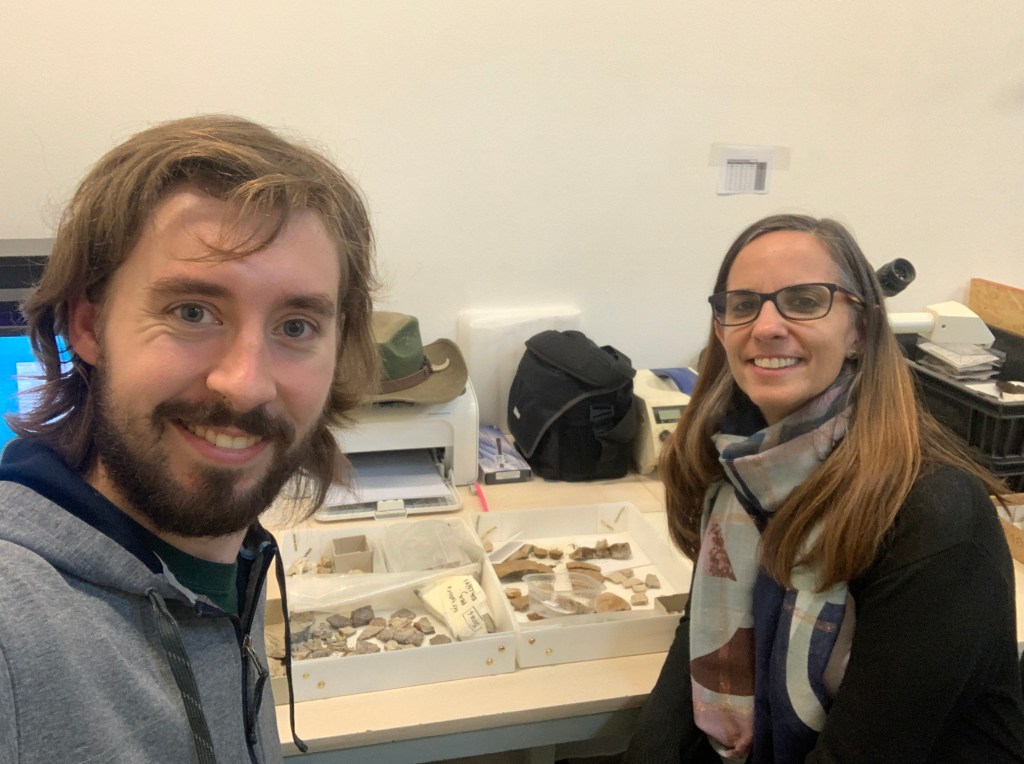
Jack Milligan recently visited Patagonia to study turtle fossils from the Paleocene Salamanca Formation in Chubut, Argentina, analyzing trace fossils on turtle shells. This study is ongoing, but early observations indicate that the tracemakers behind the trace fossils seen on Chelid and Pan-chelid turtle carapaces and plastrons include alligatoroids, beetles, leeches, and barnacles.

The image shows an example of a trace fossil left on a turtle fossil by a beetle, the morphology similar to Osteocallis isp.

Through this research, the trace fossils can be used to understand the taphonomic pathway of these turtles, and how the trace fossils can be used to inform paleoenvironmental conditions at different stages of taphonomy. In addition to the trace fossils, several paleopathologies were identified, many of which could have resulted from trophic interactions between the turtles and other animals.

Thanks to Dr. Juliana Sterli and Dr. Marcelo Krause for hosting this research at the MEF, this will be a very cool project!

Written by Jack Milligan

Dr. Mángano named Corresponding Member of the Academy of Sciences of Argentina

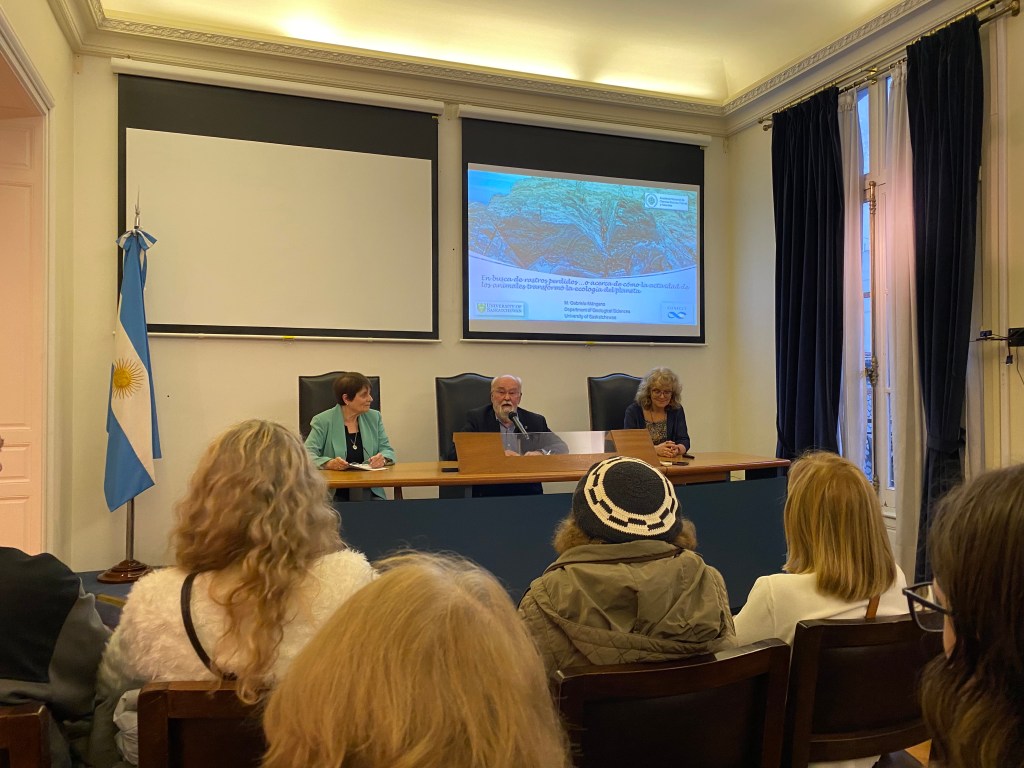
Congratulations to our own Dr. Gabriela Mángano on becoming a Corresponding Member of the National Academy of Exact, Physical, and Natural Sciences of Argentina. The goal of the Academy of Sciences of Argentina is to promote the development and dissemination of exact, physical, and natural sciences in Argentina, including their technological applications to further the scientific progress of Argentina and its collaborators abroad. We’re happy to have Gabriela represent our research group as part of this collective group of researchers from Argentina and around the world.

You can learn more about the ANCEFN at their website.

Written by Jack Milligan