
Dr. Buatois was featured in a new Nature article, where he commented on recent work done by the Palaeoburrows Project based at the Federal University of Rio Grande do Sul in Porto Alegre, Brazil.
In conjunction with the University of the Extreme South of Santa Catarina (UNESC) in Criciúma, Brazil, paleontologists and archaeologists have been studying a series of massive caves that have had multiple architects and inhabitants during the Pleistocene. The caves are found within a consolidated eolian sandstone unit of the early late Cretaceous Botucatu Formation (100 Ma). This makes the sandstone soft enough to burrow through and consolidated enough that the caves wouldn’t collapse.
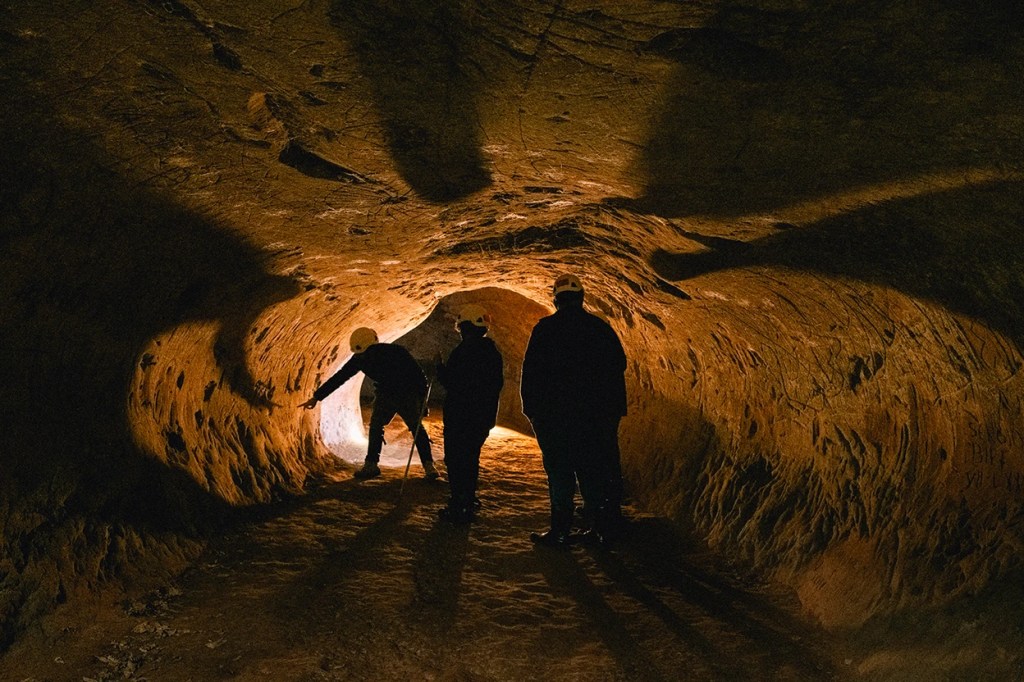
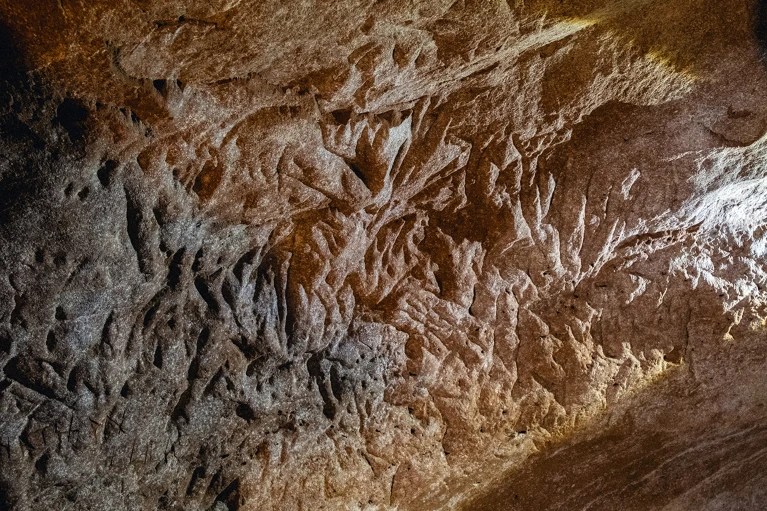
The walls of the caves preserve large claw-like markings, as well as inscriptions and graffiti by ancient and modern humans, respectively. The large claw-like marks on the walls of the cave point to the original inhabitants of the cave, proposed to be giant ground sloths. They would construct these burrows for multiple reasons, including potentially to sharpen their claws and to seek refuge from megafaunal predators.
These would be not only the largest palaeoburrows, but the largest trace fossils known so far. From this research, a novel ichnogenera and two novel ichnospecies were named, Megaichnus minor and Megaichnus major. These palaeoburrows are so far known from Brazil and Argentina, and are attributed to giant ground sloths like Scelidotherium and Glossotherium. Work is ongoing to refine the classification scheme for palaeoburrows, conservation, and opportunities for international collaboration on future studies.
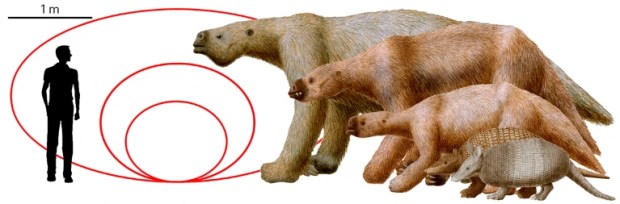
Paleoartist reconstruction of extinct giant ground sloths and armadillos by Renato Pereira Lopes.
You can read the original study in Ichnos and the news feature in Nature. Listen to a Radio-Canada interview (in French) where PhD student Dmitri Ponomarenko comments on these spectacular paleoburrows here.
Written by Jack Milligan
 ichnoplanet.ca