Ichnoplanet alumna Kaitlin Lindblad’s paleoart published in the Journal of Vertebrate Paleontology

Kaitlin Lindblad who completed her master’s degree working on crocodyliforms from Saskatchewan has had her paleoart featured in a new article, the ontogenetically youngest known pachycephalosaur (Dinosauria: Ornithischia) postcranium, in the Journal of Vertebrate Paleontology.

Researchers Bryan R. S. Moore, David C. Evans, Michael J. Ryan, R. Timothy Patterson, and Jordan C. Mallon found disarticulated pachycephalosaur remains including vertebral, hindlimb, pelvic and postcranium material in uppermost Maastrichtian Frenchman Formation in southern Saskatchewan. Given the lack of diagnostic material, they do not assign the fossil (CMNFV 22039) a taxonomic identity, however Sphaerotholus buchholtzae is considered the most likely candidate given the stratigraphic age and geographic location of the specimen. Morphometric analysis of CMNFV 22039 suggests that the skeleton is that of an early-stage juvenile and very likely the youngest pachycephalosaur ever recorded. This is supported by the sample’s small size and histological analysis showing a rapidly growing woven bone of the tibia and fibula. This research is key for understanding the growth and development of pachycephalosaurs.
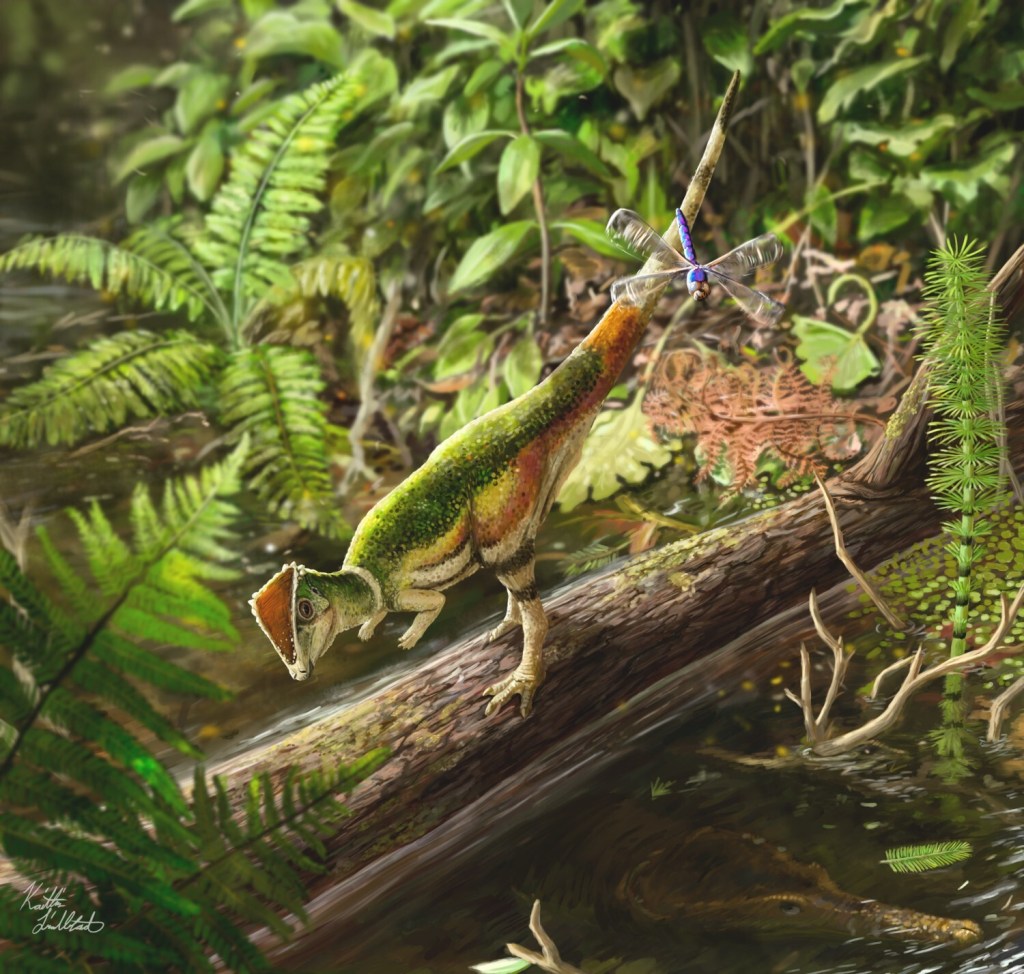
FIGURE 18. Life reconstruction of CMNFV 22039 in an environment typical of the upper Maastrichtian Frenchman Formation. Illustration by Kaitlin Lindblad. Used with permission.

Check out the research in JVP here.

Written by Zane Gabriel Goodell
Tracking hadrosaurs in northwestern Alberta with the Boreal Alberta Dinosaur Project

This past summer, Jack Milligan represented Ichnoplanet during fieldwork conducted by the Boreal Alberta Dinosaur Project (BADP) at the University of Alberta (UA), and the Philip J. Currie Dinosaur Museum (PJCDM) under the leadership of UA professor Dr. Corwin Sullivan, and USASK adjunct professor and PJCDM curator Dr. Emily Bamforth. Objectives of this fieldwork include collecting fossils from the late Cretaceous Wapiti Formation near the city of Grande Prairie. The Wapiti Formation is rich in fossils, including freshwater invertebrates, small vertebrates, and especially non-avian dinosaurs. The most common dinosaurs in northern Alberta based on the number of occurrences are the hadrosaurs, commonly referred to as the “duck-billed” dinosaurs. These are large herbivorous dinosaurs that have been suggested to travel in large herds in search of new food sources and as a defense against predatory theropod dinosaurs.

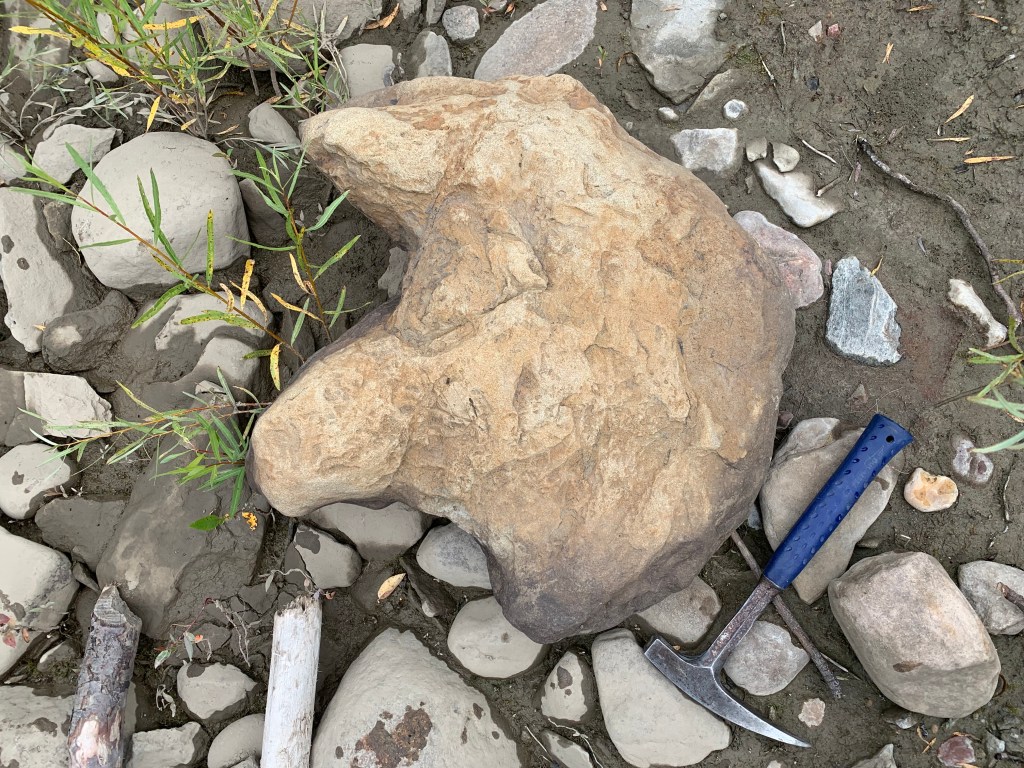
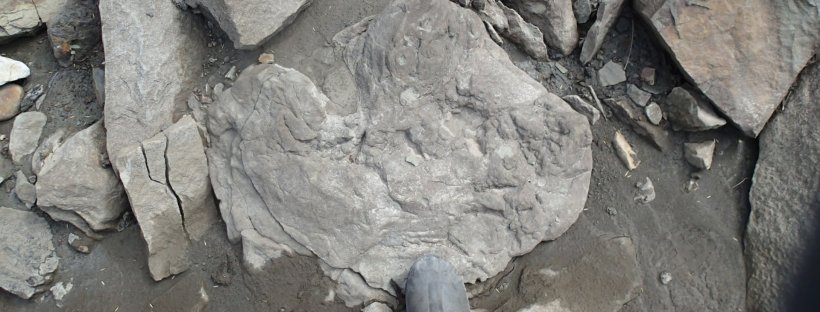
During July and August, BADP collected several large, three-toed hadrosaur tracks from various sites across northwestern Alberta. These tracks are isolated natural casts of footprints that infilled the original track and weathered out of situ. Some of these tracks were carried out of the site by hand across rushing rivers much to the chagrin, all be it temporary, by the team. Studying these tracks will allow the BADP team to learn more about the kinds of environments these dinosaurs were walking through and the taphonomy and different preservation of the tracks.

Large hadrosaur track with a rock hammer for scale, surrounded by grass and mud covered stones

Images provided by Jack Milligan and Emily Bamforth.

Written by Jack Milligan