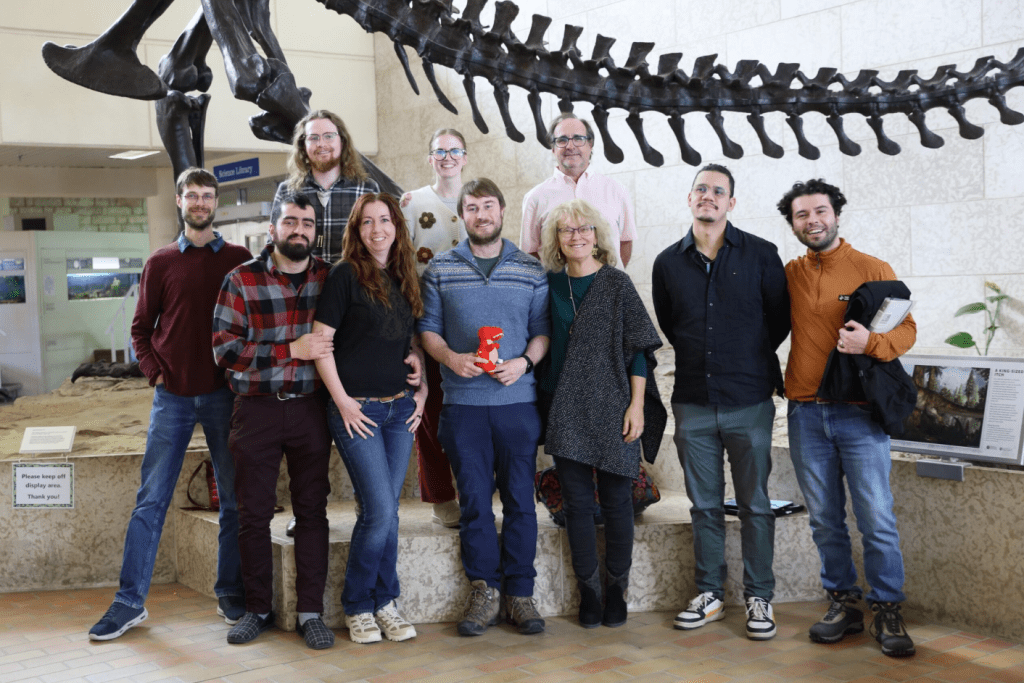
Seven members of Ichnoplanet presented original research at the first ever USASK Palaeobiology Society Geoscience Symposium on the University of Saskatchewan campus on March 7th, 2026. The symposium featured keynote speakers Dr. Emily Bamforth from the Phillip Curie Museum and Dr. Anthony Shillito from the University of Saskatchewan presenting their original research on Triceratops from Saskatchewan and the colonization of terrestrial environments, respectively. We had a full and exciting day of presentations on a wide range of topics including dinosaurs, brachiopods, plesiosaurs, and, of course, trace fossils.
We’d like to thank the USASK Palaeobiology Society for organizing this outstanding conference and all of the attendees that came out to see the talks highlighting new findings in paleontology.
The Ichnoplanet research group at the USASK Palaeobiology Society 2026 Geoscience Symposium. From left to right, top: Zane Goodell, Jessica Morstad, Dr. Luis Buatois. Bottom: Dmitri Ponomarenko, Martín Schenardi, Chantelle Edwards, Dr. Anthony Shillito, Dr. Gabriela Mángano, Alejandro Corrales-García, and Miguel Norambuena.
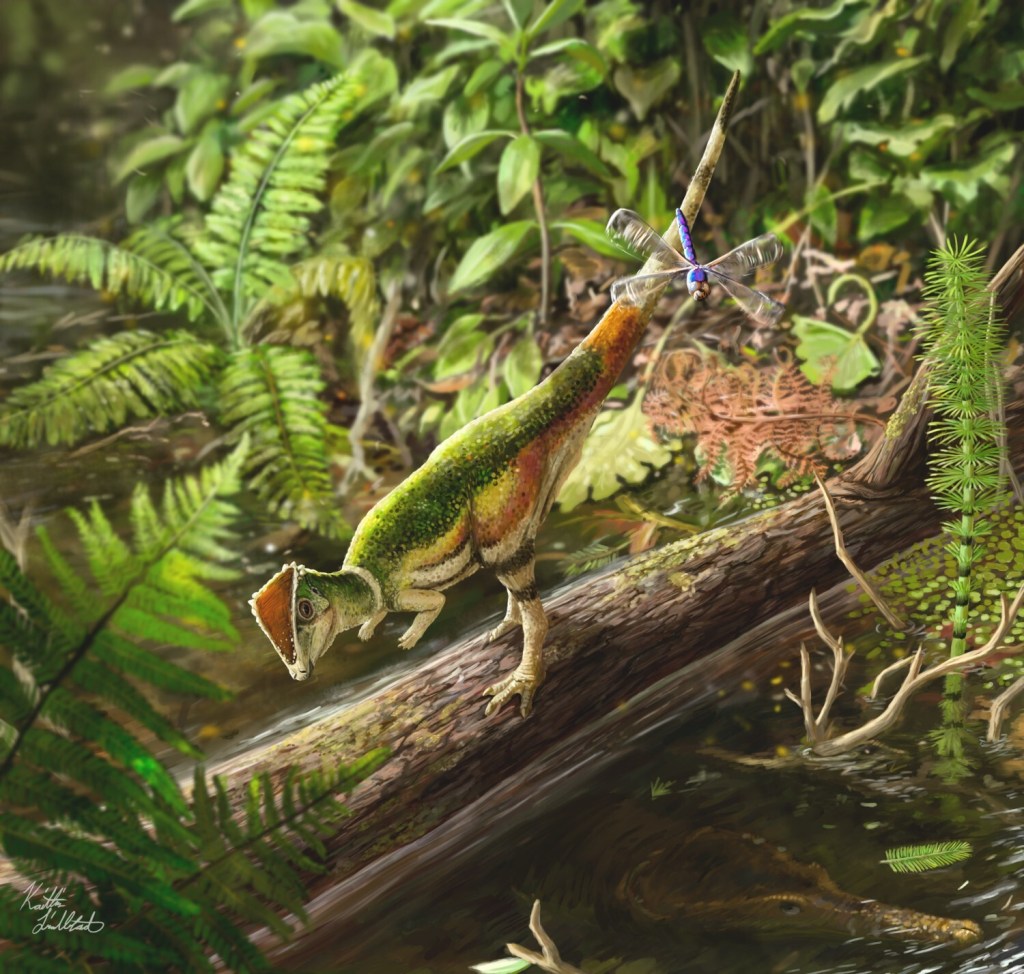
Researchers Bryan R. S. Moore, David C. Evans, Michael J. Ryan, R. Timothy Patterson, and Jordan C. Mallon found disarticulated pachycephalosaur remains including vertebral, hindlimb, pelvic and postcranium material in uppermost Maastrichtian Frenchman Formation in southern Saskatchewan. Given the lack of diagnostic material, they do not assign the fossil (CMNFV 22039) a taxonomic identity, however Sphaerotholus buchholtzae is considered the most likely candidate given the stratigraphic age and geographic location of the specimen. Morphometric analysis of CMNFV 22039 suggests that the skeleton is that of an early-stage juvenile and very likely the youngest pachycephalosaur ever recorded. This is supported by the sample’s small size and histological analysis showing a rapidly growing woven bone of the tibia and fibula. This research is key for understanding the growth and development of pachycephalosaurs.
FIGURE 18. Life reconstruction of CMNFV 22039 in an environment typical of the upper Maastrichtian Frenchman Formation. Illustration by Kaitlin Lindblad. Used with permission.
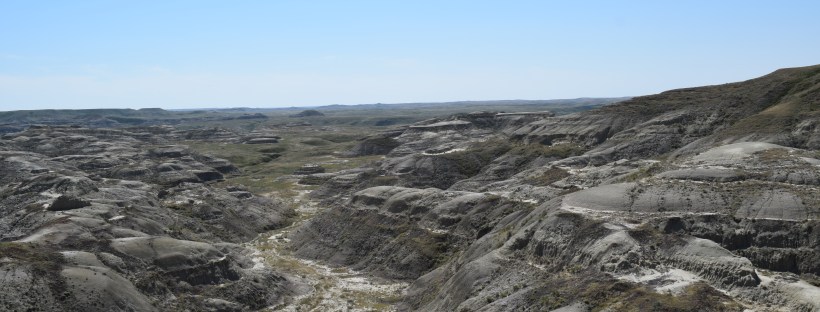
Towards the end of the summer, I had the opportunity to continue fieldwork at two multitaxic Edmontosaurus quarries within the Uppermost Cretaceous Frenchman Formation in the East Block of Grasslands National Park in southern Saskatchewan under the supervision of Dr. Emily Bamforth of the Philip J. Currie Dinosaur Museum and Dr. Ryan McKellar of the Royal Saskatchewan Museum. These excavations have been ongoing and have yielded some fantastic fossil specimens and interesting geology.
We collected a limb bone (tibia) from one of our two Edmontosaurus quarries, called the “Leo” quarry. The tibia shows feeding traces as evidenced by well-defined tooth marks. During the excavation of the tibia, a shed tooth from a tyrannosaurid (Tyrannosaurus rex) was collected from the same depositional layer. This association of tooth traces on Edmontosaurus bones and T. rex teeth suggests that Leo was scavenged during subaerial exposure on a floodplain within a meandering fluvial system. Limb bones have a high likelihood of being consumed due to large locomotor muscles being present (a great food source for predators like T. rex), and thus will tend to have more tooth traces on the bone.
On an adjacent butte within the same depositional layer as the “Leo” quarry, there is a point bar deposit containing a second active quarry named the “Clifford“ quarry. While the Edmontosaurus in this quarry has yet to produce elements with tooth marks, teeth from T. rex and the crocodyliform Borealosuchus have shown up this past season. Adding to the mystery of this quarry, several articulated turtle skeletons have been collected from this deposit, showing no evidence of being scavenged.
Tooth marks have been a widely debated aspect of vertebrate ichnology. Recently, the category-modifier (CM) system was proposed by Wyenberg-Henzler et al., 2024, as a method to identify different morphologies of tooth marks and their associated behaviours. While not strictly defined within a traditional ichnological framework, it is the most comprehensive overview of tooth marks on bones in the literature to date. Based on the CM system, the tooth marks left on the Edmontosaurus tibia appear to be internally chattered, referring to the crescentic depression on the inside of the tooth mark. Shed carnivore teeth from both quarries suggest that the dominant predators within this ecosystem were crocodyliforms and tyrannosaurs.
Further excavation of the quarries is required, and research into the taphonomy of these two Edmontosaurus quarries is ongoing, but there are sure to be some exciting discoveries to be made in future field seasons!
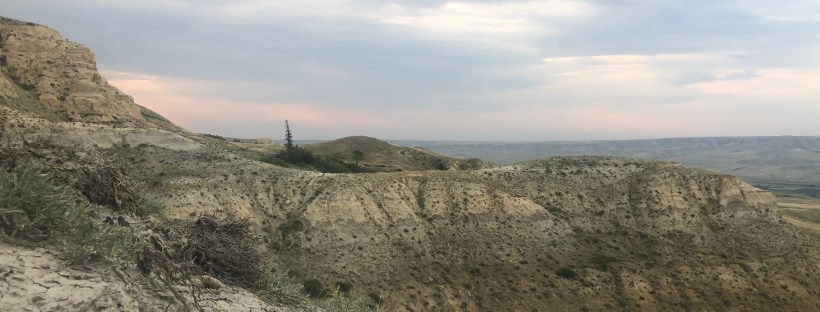
Throughout this past summer, I had the opportunity to volunteer with the Saskatchewan Geologic Survey under Dr. Meagan Gilbert in my hometown of Eastend, Saskatchewan. This project aimed to characterize the stratigraphy and depositional environments of the Upper Cretaceous and lower Paleogene of southwest Saskatchewan.
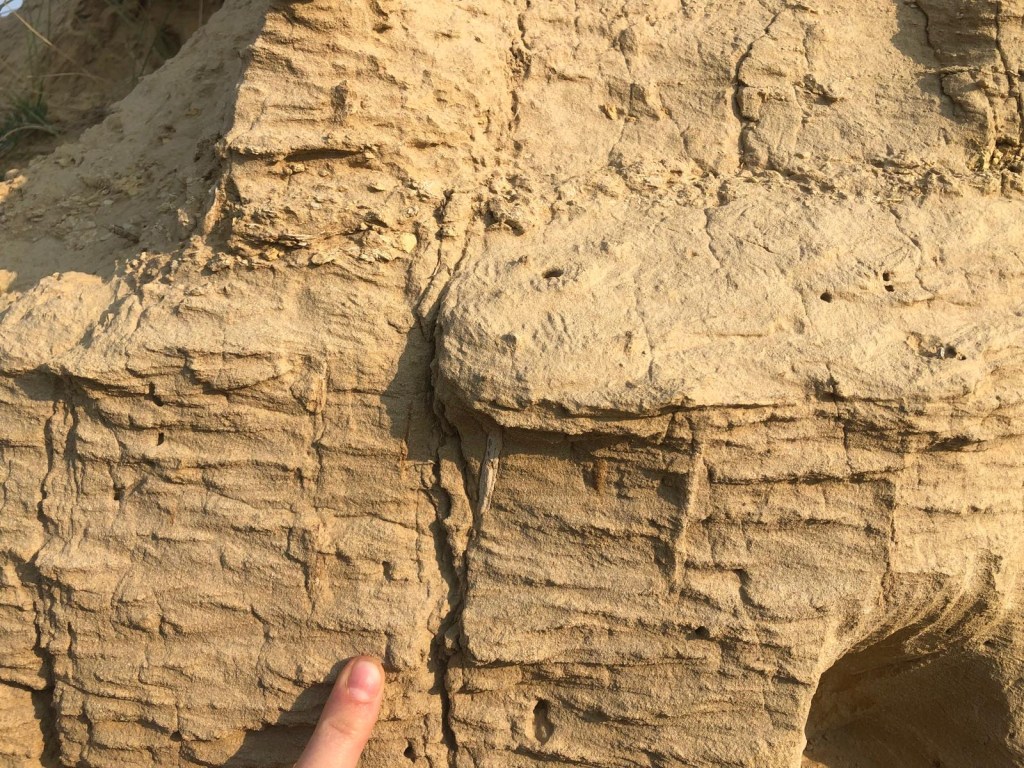
Skolithos isp. in a crossbedded sandstone fluvial channel deposit in the buff facies of the Upper Ravenscrag Formation in southwestern Saskatchewan. Photo provided by Mollie Black
We went to many different geologic outcrops around the town of Eastend. A typical day consisted of taking measurements and samples (so many samples) across the section. A section was first chosen based on the extent of exposed bedrock and then measured from the lowermost exposed bedrock to the top. It wasn’t all just rocks, though! We also found many neat trace fossils and plant fossils, including many just above the KPg boundary.
A huge thank you to all landowners who allowed access to their land.
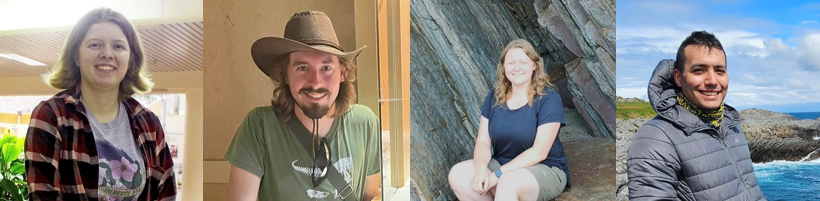
We have had a busy summer, and we want to start by congratulating Jack Milligan, Kaitlin Lindblad, Federico Wenger, and Kathrine Thue for successfully defending their M.Sc. theses!
Jack studied the depositional context of bioeroded dinosaur bones from the upper Cretaceous of Saskatchewan; Kaitlin studied the biogeography, environment and paleoecology of crocodylians from the northern plains; Federico studied the ichnodiversity and bioturbation of Devonian shallow marine deposits in Argentina, and Kathrine studied the sedimentology and ichnology of Silurian-Devonian deposits in Asturias, Spain.
Once again, congrats to these new masters of ichnology!



 ichnoplanet.ca