
Recently, an international team of ichnologists led by Katherine A. Turk described a new ichnogenus from the late Ediacaran Huns Member of the Urusis Formation in southern Namibia. They described a series of meandering, intertwining tubes exhibiting dual lineation patterns preserved in convex relief, appearing to disappear into the sediment and reemerge on the sediment surface. The distal terminal ends of the tubes are rounded and bulbous. Modern priapulid worms have produced such structures via peristaltic probing. This is similar to the famous Ediacaran-Cambrian biostratigraphic marker trace fossil Treptichnus pedum, also attributed to priapulid worms.
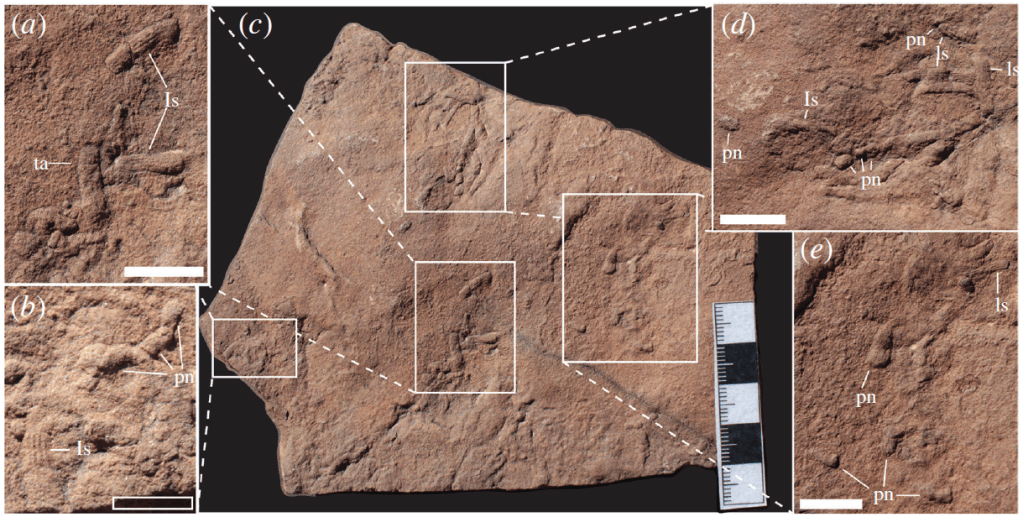
Figure 2 from Turk et al., 2024 showing the holotype of Himatiichnus mangano. See paper here.
The team also noted that these new trace fossils represented the earliest occurrence of Scalidophora, and are much like those traces of worms in the Cambrian, suggesting ecological interactions typical of the Cambrian Explosion appeared earlier than previously thought (the long fuse hypothesis). The morphological evidence pointed to these trace fossils being a novel ichnogenus and ichnospecies. The team gave the trace fossils the name Himatiichnus mangano, named after our very own Dr. M. Gabriela Mángano!
We couldn’t agree more with this decision, as Dr. Mángano has not only spent her career furthering the field of ichnology from all aspects, but has also contributed greatly to research on the Ediacaran-Cambrian transition around the world. Congrats, Dr. Mangano, on this great honour and achievement!
Get the scientific paper in Royal Society Open Science here.
Written by Jack Milligan
 ichnoplanet.ca