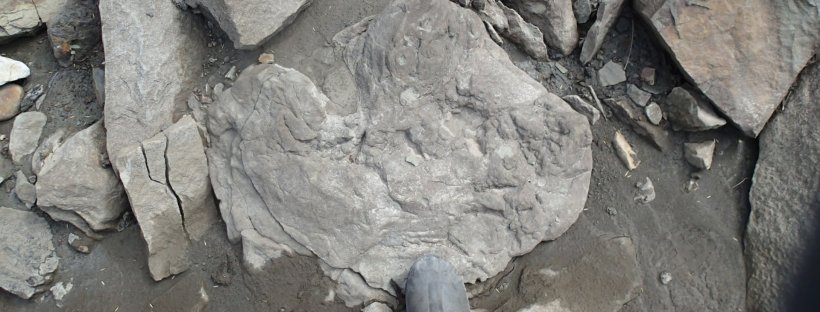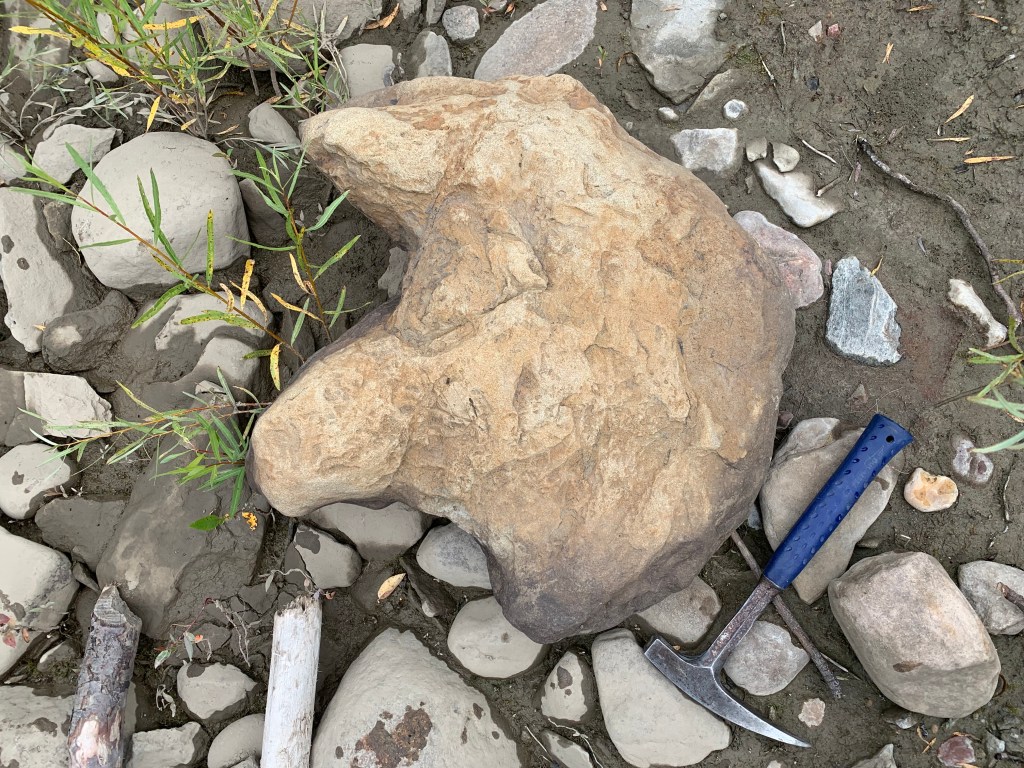
Ichnoplanet would love to congratulate Dr. Manuel Pérez-Pueyo on his successful Ph.D. thesis defense at the University of Zaragoza, Zaragoza, Spain. His thesis is titled; “Contributions of the Tremp Fm (upper Maastrichtian) in Ribagorza (Aragonese Pyrenees, Huesca) to the knowledge of finicretaceous vertebrate communities on the Ibero-Armorican island.” Our own Luis Buatois was an external supervisor of this research. You can read more about Dr. Manuel Pérez-Pueyo’s research here.
We’re excited to hear about this outstanding accomplishment, and can’t wait to see where Manuel goes next!
Congratulations to our own Dr. Gabriela Mángano on becoming a Corresponding Member of the National Academy of Exact, Physical, and Natural Sciences of Argentina. The goal of the Academy of Sciences of Argentina is to promote the development and dissemination of exact, physical, and natural sciences in Argentina, including their technological applications to further the scientific progress of Argentina and its collaborators abroad. We’re happy to have Gabriela represent our research group as part of this collective group of researchers from Argentina and around the world.
You can learn more about the ANCEFN at their website.
Last week, our own Romain Gougeon successfully defended his Ph.D. thesis! Romain has worked very hard to achieve this milestone, so big congratulations to him! His thesis focused on integrating sedimentologic and ichnologic datasets to learn more about the evolution of early metazoans from the latest Ediacaran and earliest Cambrian Chapel Island Formation of Newfoundland, Canada. During his research, he and his collaborators have published a series of papers on this topic, much of which you can find on his profile, and on our publication page here.
We look forward to hearing more about your future research, and congratulations once again to now Dr. Romain Gougeon!
During his studies on the subsurface geology and ichnology of the Basal Sandstone Unit and Earlie Formation in Alberta and Saskatchewan, Ph.D. student Andrei Ichaso conducted core analysis of the study area. One of the studied core samples records the tide-influenced marginal-marine shales of the middle Cambrian Earlie Formation (~500 Ma), and also happened to capture something else. The complete body fossil of a trilobite, a Paleozoic marine invertebrate, was caught and preserved within the drill core! The trilobite was identified by a National University of Cordoba Ph.D. student, and former M.Sc. student in the Department of Geological Sciences at USask, Neal Handkamer, as Ehmania weedi. The specimen is around 32 mm long and recovered from a drilling depth of 2.3 km (see figure below, Handkamer et al., 2023).
This discovery marks the first occurrence of a trilobite body fossil of Cambrian age from the province of Saskatchewan. Following this discovery, the trilobite was featured on the front cover of the 2023 Saskatchewan Geoscience Calendar from the Saskatchewan Geological Society! You can read more in the Canadian Journal of Earth Sciences here.
Congratulations to Andrei on this awesome and remarkable find!
Dr. Maximiliano Paz has received the International Association of Sedimentologists (IAS) Postdoctoral Research Grant. He is currently studying the sedimentology and ichnology of the Cambrian-Ordovician Los Cabos Series. These funds will be used to cover one month of fieldwork expenses to log 4000 m of the succession in the rocky cliffs of western Asturias, Spain.
Jack Milligan has received the IAS Judith McKenzie Fieldwork Award. He is studying the sequence stratigraphy and taphonomy of dinosaur bones including describing osteic bioerosion trace fossils from the latest Cretaceous Frenchman Formation. This funding will cover fieldwork expenses to measure coastal floodplain and fluvial outcrops along the Frenchman River Valley of southwestern Saskatchewan.
Federico Wenger also received the IAS Judith McKenzie Fieldwork Award. He will be studying the sequence stratigraphy and ichnology including the degree of bioturbation, ichnodisparity, and ichnodiversity to understand the different environmental zones of the Devonian Talacasto Formation, in the geological province of Precordillera, western Argentina. This funding will help finance the trip to the study area.
Congratulations to Maximiliano, Jack, and Federico, and best of luck with your fieldwork, and thank you to the International Association of Sedimentologists for helping fund Ichnoplanet research at USask!