
New research from PhD candidate Alejandro Corrales-García, Gabriela Mángano and Jean Benard-Canon was just published on Burgess-shale type deposits from southeastern British Columbia.
A 2015 investigation of a 2.65 m interval recovered 12 ichnotaxa and three types of trace fossils left in open nomenclature, the most frequent including Helminthoidichnites tenuis, Palaeophycus tubularis, Diplocraterion isp., and finger-like structures (FLS). Overall, the Cranbrook assemblages do not present well-defined tiering structures and represent surficial epifauna and shallow-tier infauna that colonized the sea bottoms during brief windows between episodic flows and inhabited dysoxic to relatively well-oxygenated outer shelf environments. This study gives us additional insight into the behavior of soft-bodied organisms in some of the most recognizable deposits representing early animal life.
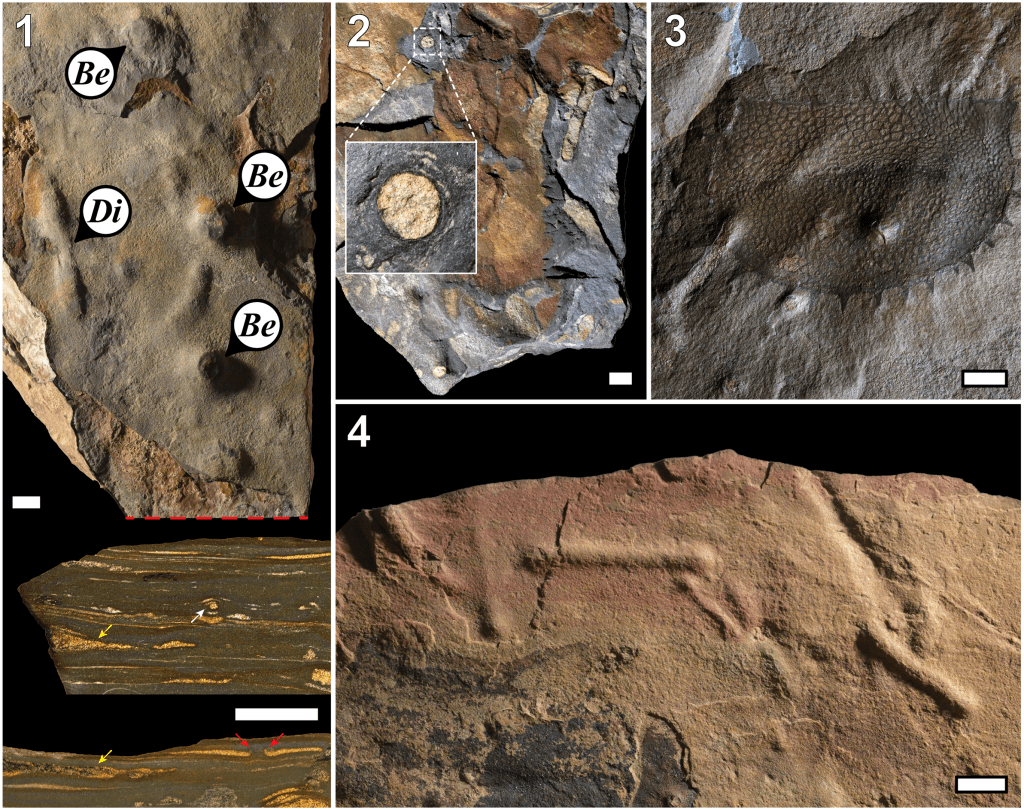
To learn more, check out the paper published in The Journal of Paleontology here.
Written by Zane Gabriel Goodell
 ichnoplanet.ca