ICCI 2019- Exploring continental ichnology in Germany.

This past September both Dr.’s Mángano and Buatois travelled to Halle, Germany, to attend the 3rd International Conference of Continental Ichnology. The meeting was organized by Oliver Wings at the Martin Luther University Halle-Wittenberg. There, Gabriela Mángano delivered her keynote talk entitled “Continental invertebrate and plant trace fossils in space and time: State of the art and prospects.”. Luis Buatois gave a talk entitled “Trace fossils, water table and depositional evolution in eolian systems (Cretaceous Mulichinco Formation, subsurface of western Argentina)”. Activities during the conference include visits to several museums, including the Halle Paleontological and Zoological Museums and to Museum of Prehistory. One of the highlights of the meeting was the post-conference fieldtrip to visit Permian-Cretaceous outcrops in the Bavaria, Thuringia, Lower Saxony, and Saxony-Anhalt regions! The collections at the Museums at Gotha and Schleusingen were visited as well.

This slideshow requires JavaScript.

By Luis Buatois

13th International Symposium on the Ordovician System

LogoThis July, Luis Buatois travelled to Novosibirsk, Russia to give a keynote at the 13th International Symposium on the Ordovician System. Luis’ talk was entitled “Quantifying the role of bioturbation and bioerosion in ecospace utilization and ecosystem engineering during the Cambrian Explosion and the Great Ordovician Biodiversification Event”. This meeting was organized by Olga Obut, Nokolay Sennikov and Tat’yana Kipriyanova from the Trofimuk Institute of Petroleum Geology and Geophysics in Novosibirsk. Activities during the conference included visits to the Paleontological and Mineralogical Museums and to the recently created University Museum which hosts a nice exhibition on the history of life. Luis also participated in a pre-conference fieldtrip to visit Cambrian-Ordovician outcrops in the St Petersburg area led by Andrey Dronov. The fieldtrip was a great opportunity to look at spectacular examples of the so-called Ordovician Bioerosion Revolution.


This slideshow requires JavaScript.

By Luis Buatois

Asturias field course

2017-09-02 07.32.45

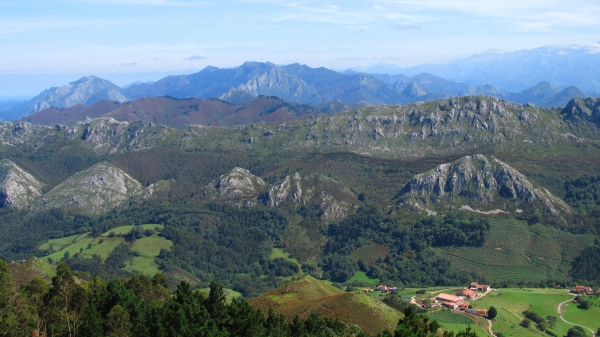
What is better than learning about trace fossils? Learning about trace fossils in the gorgeous setting of Asturias, Spain!

This will be the third iteration of Dr. Mángano’s and Dr. Buatois’ field course in Asturias, where they travel the timescale and look at everything from carbonate reefs to turbidites. They’ll be joined by geological sciences students from Canada and Spain, giving a truly international flavour to the trip.

While I can’t share exactly what the students will be learning (they need to learn that themselves!) I can share photos to make others jealous of this incredible adventure!

2017-09-07 05.07.27.jpg

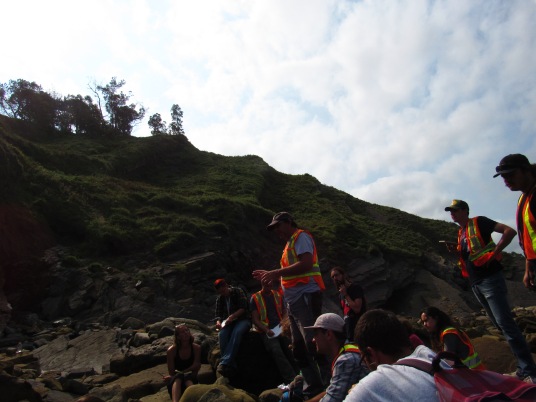
Students listening as Dr. Buatois gives a lecture on the sedimentology of the surrounding rocks.

2017-09-04 01.59.09.jpg

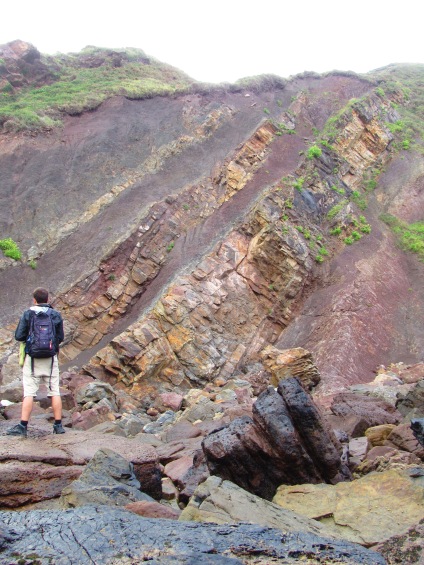
Ph.D. candidate Maxi, graciously acting as my scale.

2017-09-04 01.40.24.jpg

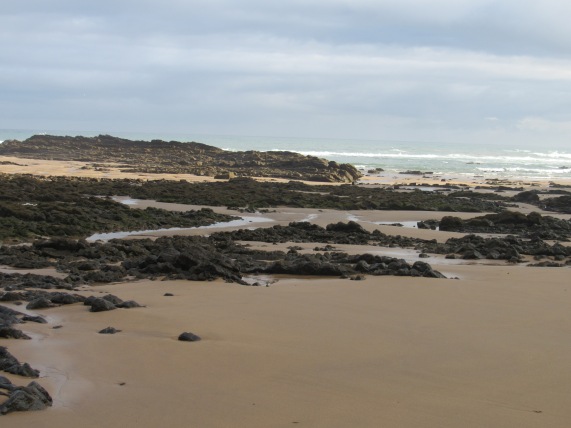
The best classroom on earth.

2017-09-07 05.57.07.jpg

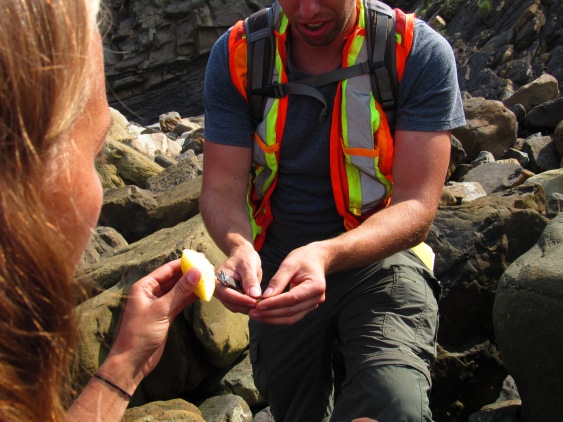
Some of the more… adventurous students, trying some fresh-from-the-sea cuisine.

By Brittany Laing

XV International Ichnofabric Workshop

Screenshot 2019-04-15 14.16.54

We’re going to Prague!

A few members of our ichnofamily will be arriving in Prague on April 26th for the 15th International Ichnofabric Workshop. There, they will meet with other ichnologists to discuss recent ichnofabric research and to visit Czech fossil localities.

Ichnofabrics_Prague_2019.jpg

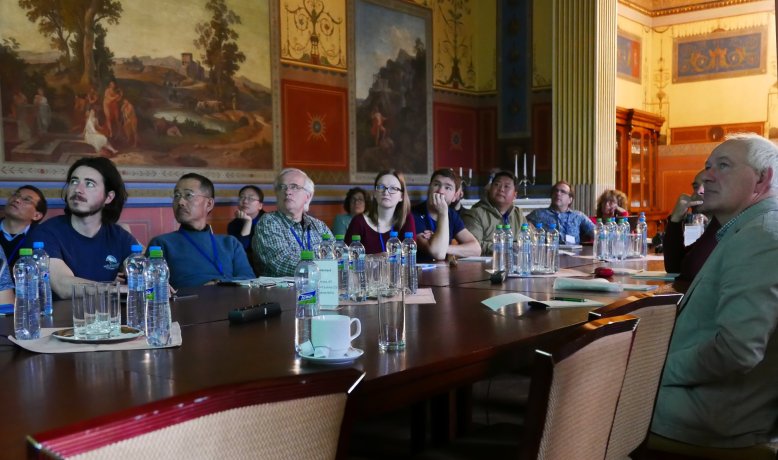
Conference attendees in Prague (photo taken by Radek Mikulas)

Presentations

Ichnofabrics from eolian systems: An example from the Cretaceous Mulichinco Formation, subsurface of western Argentina.

Buatois, L.A. & Echevarría, C.

Paleoproterozoic ichnofabrics from 2.1 Ga (Francevillian Basin, Gabon)?

Mángano, M.G., El Albani, A., Buatois, L.A., Bengtson, S., Riboulleau, A., Bekker, A., Konhauser, K., Lyons, T., Rollion- Bard, C., Bankole, O., Meunier, A., Trentesaux, A., Mazurier, A., Aubineau, J., Laforest, C., Baghekema, S.G.L., Fontaine, C., Recourt, P., Fru, E. C., Macchiarelli, R., Reynaud, J.Y., Gauthier-Lafaye, F. & Canfield, D.E

The role of Psammichnites in the origin of an Early Cambrian shelf sediment mixed layer.

Gougeon, R.C., Mángano, M.G., Buatois, L.A., Narbonne, G.M. & Laing, B.A

Ichnofabrics from the Cambrian-Ordovician Deadwood and Earlie formations: exploring evolutionary and environmental controls.

Ichaso, A., Mángano, M.G., & Buatois, L.A.

Screenshot 2019-04-24 11.43.17

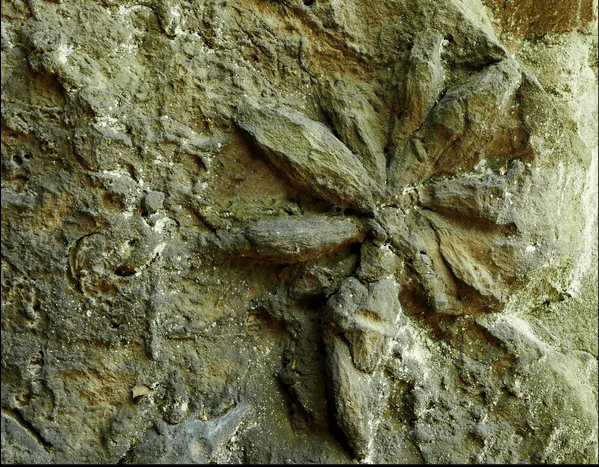
Cretaceous Asterosoma from the type locality in Czechia.

By Brittany Laing

Evidence of motile organisms discovered in 2.1 billion-year-old strata

Recent research by Dr. Mángano and Dr. Buatois, performed in collaboration with researchers from around the world, suggests that organisms were capable of movement much earlier than previously thought.


Around 80 specimens of 1 to 6 millimetre-sized, pyritized, string-shaped structures were collected from the Francevillian Basin in Gabon and subjected to a slew of analyses in order to determine their origin. The structures were found to have been formed within the sediment, lithified prior to compaction with open pore spaces, and filled with pyrite formed from sulfide generated by sulfate-reducing microorganisms.

After a careful comparison with several abiotic structures such as syneresis cracks and microbial mat roll-ups, as well as various biotic strucutres, it was determined that these structures were likely produced by a motile organism. It is unlikely that they were produced by a metazoan, since the structures change in width along their length, and sometimes merge. More likely, the research suggests, is that these trace fossils were formed by something akin to a slime mold.

The organism was opportunistic, evolving and living thanks to a temporary rise in oxygen levels at the time. When oxygen levels dropped again, and stayed low until roughly 650 million of years ago, the organism probably went extinct. As a result, it’s impact on the evolution of life on earth was probably short-lived.

Read the CBC article here

Get the full scientific article here

By Brittany Laing