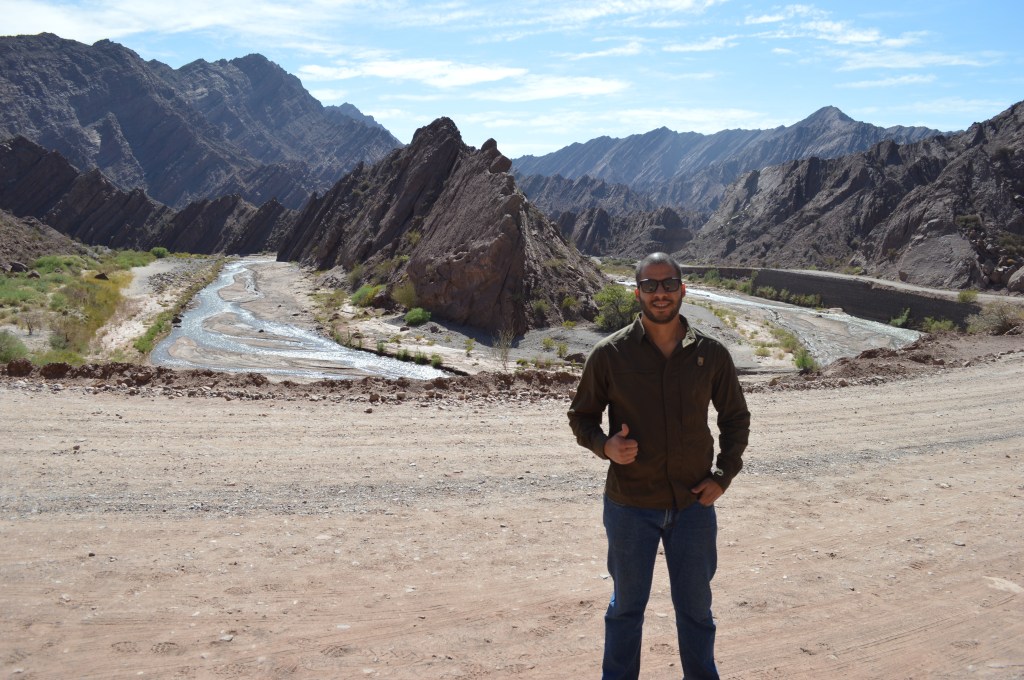
This past Monday our very own Gustavo Valencia successfully defended his Master’s thesis. A big congratulations to Gustavo on this great accomplishment! His thesis examined both the ichnology and fluvial architecture of the Miocene Vinchina Formation in the Vinchina Basin from NW Argentina. Keep an eye out for a journal article on the subject soon! You can hear about the research from Gustavo himself in his final seminar to the University of Saskatchewan here.
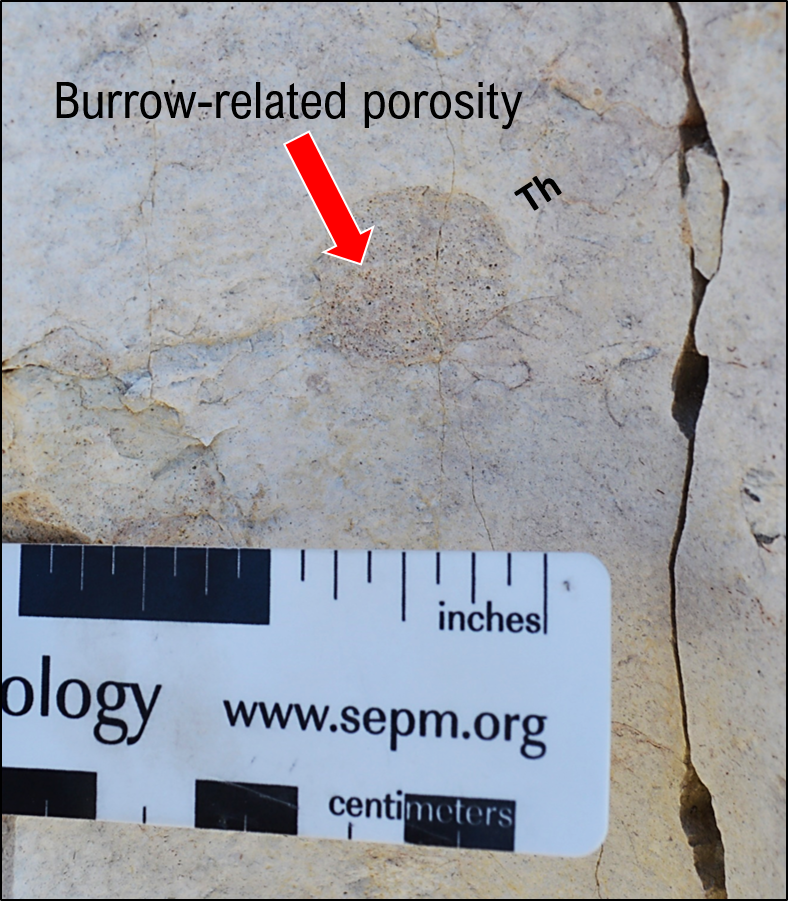
During three field campaigns from 2017 to 2019, Fernando Valenciatogether with Gustavo Valenciaand colleagues from the Texas A&M University (Dr. Juan Layaand Dr. Mike Pope) have been describing several stratigraphic sections where the highly-bioturbated Buda Limestone crops out. Most outcrops are distributed along the central and west Texas regions (Fig. 1). The main focus of Fernando’s project is to define the sedimentological model of the Buda Limestone in west-central Texas and the implications of the pervasive bioturbation in the process of porosity creation. Preliminary observations recognized a strong influence of the trace fossils in the diagenetic processes of the carbonate succession (Fig. 2).
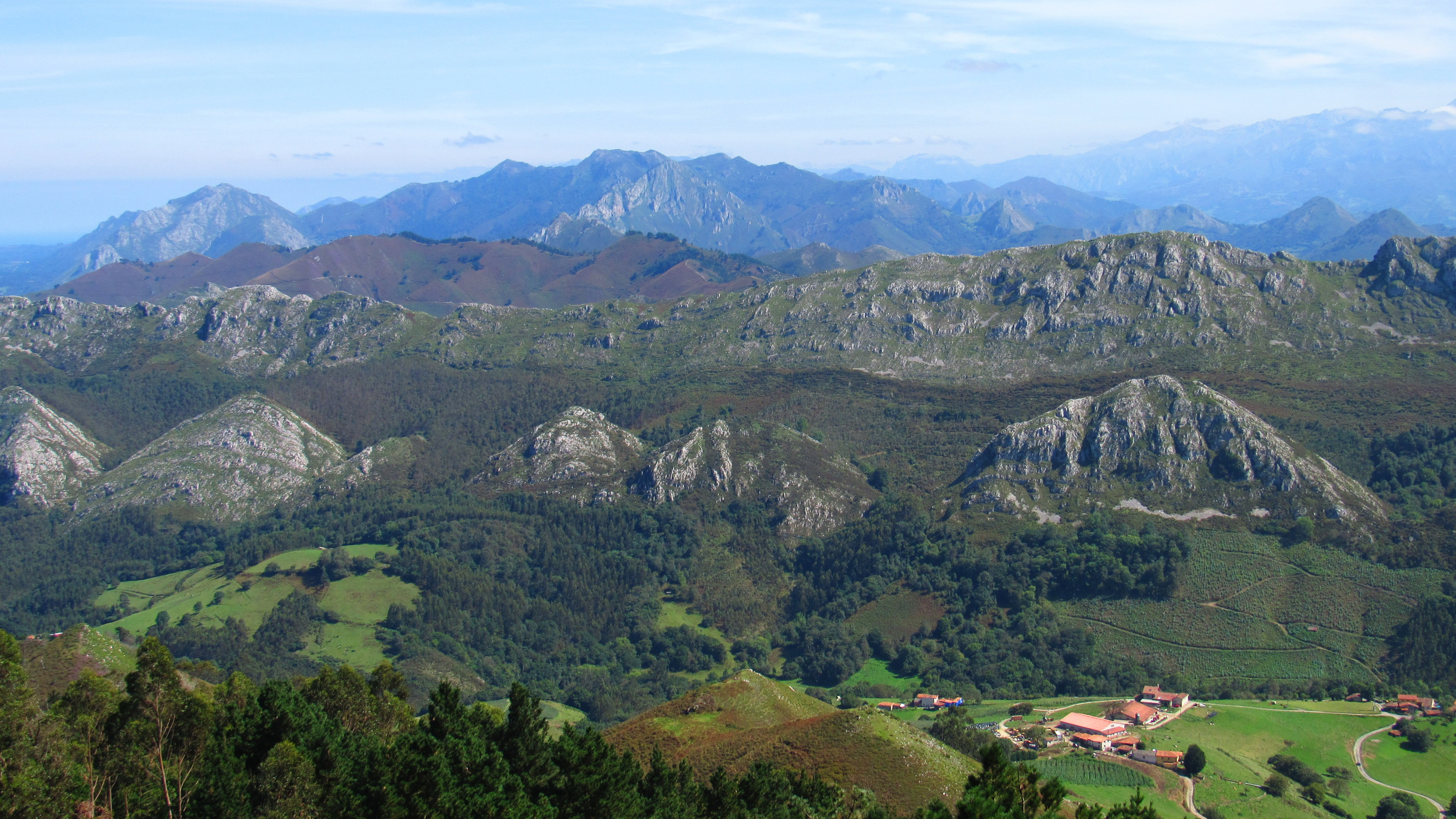
What is better than learning about trace fossils? Learning about trace fossils in the gorgeous setting of Asturias, Spain!
This will be the third iteration of Dr. Mángano’s and Dr. Buatois’ field course in Asturias, where they travel the timescale and look at everything from carbonate reefs to turbidites. They’ll be joined by geological sciences students from Canada and Spain, giving a truly international flavour to the trip.
While I can’t share exactly what the students will be learning (they need to learn that themselves!) I can share photos to make others jealous of this incredible adventure!
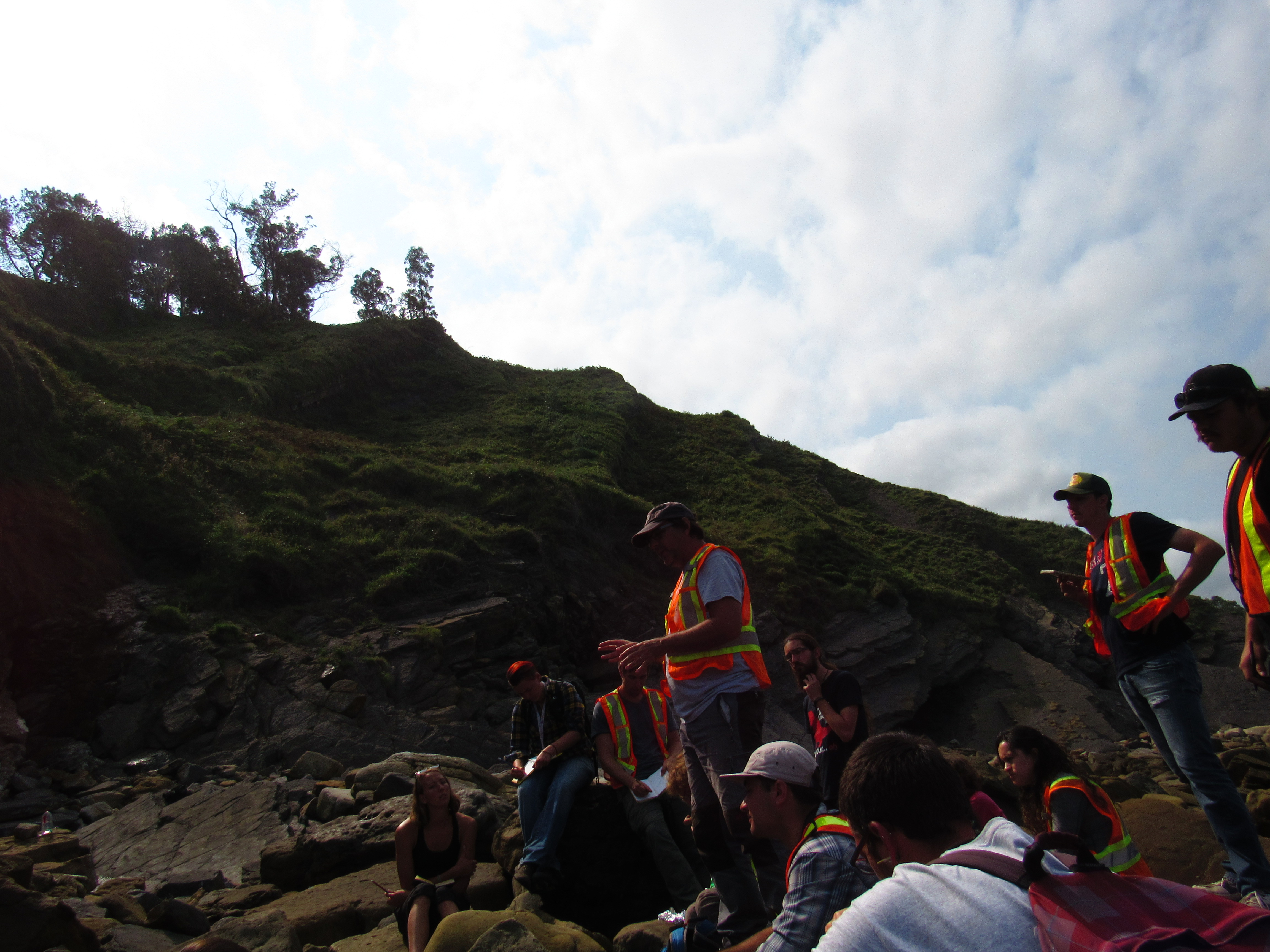
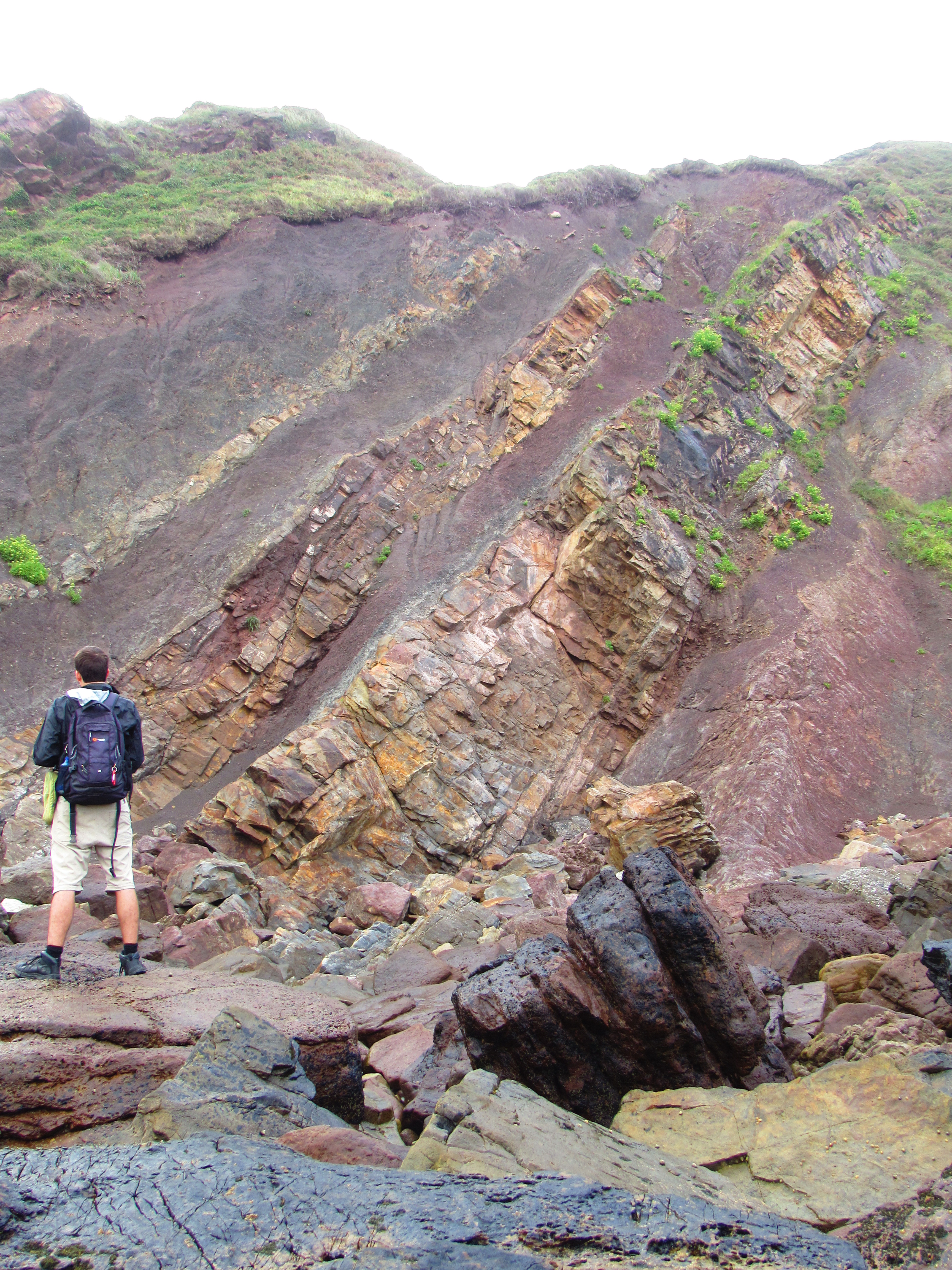
Students listening as Dr. Buatois gives a lecture on the sedimentology of the surrounding rocks.
Ph.D. candidate Maxi, graciously acting as my scale.
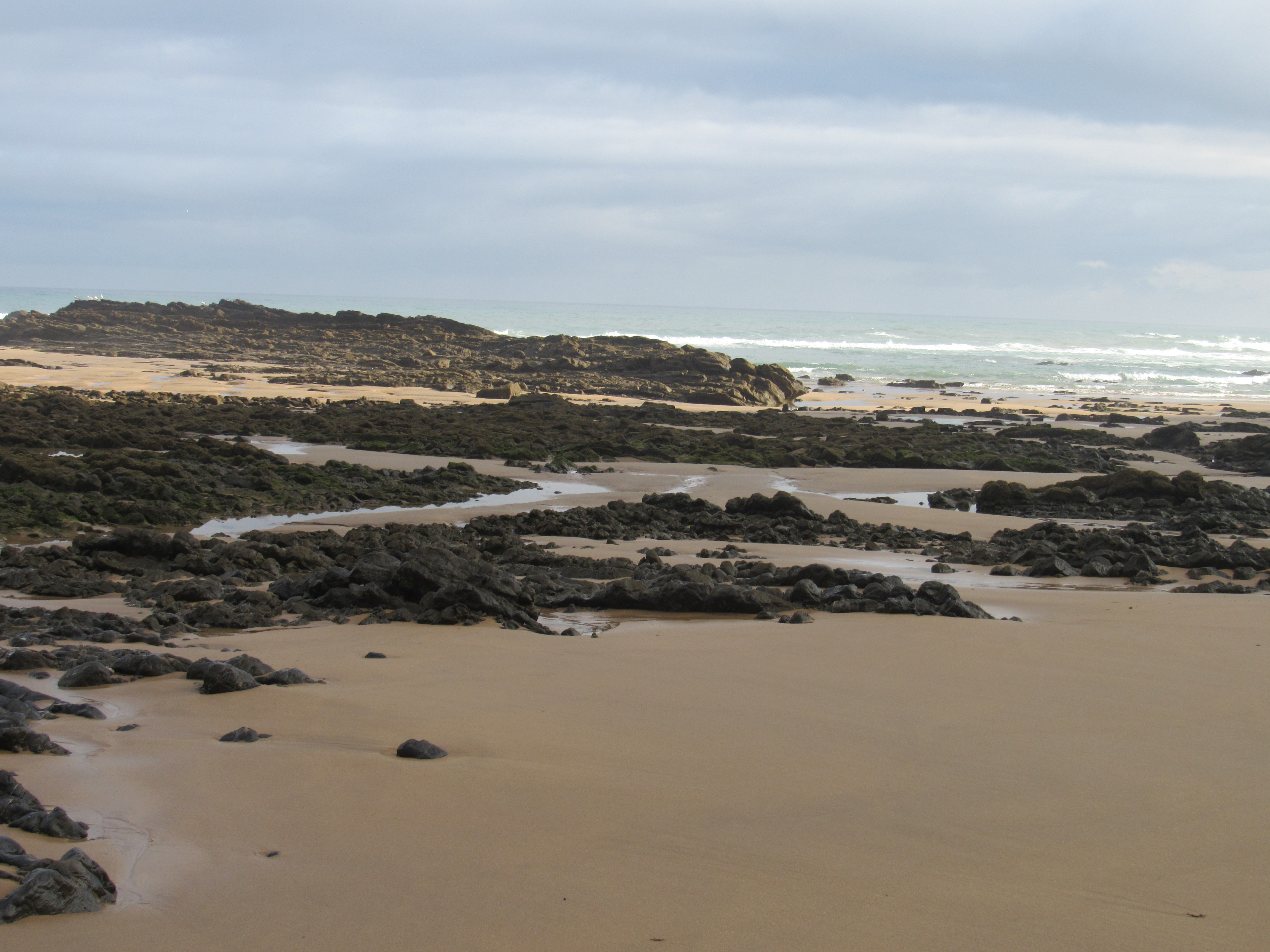
The best classroom on earth.
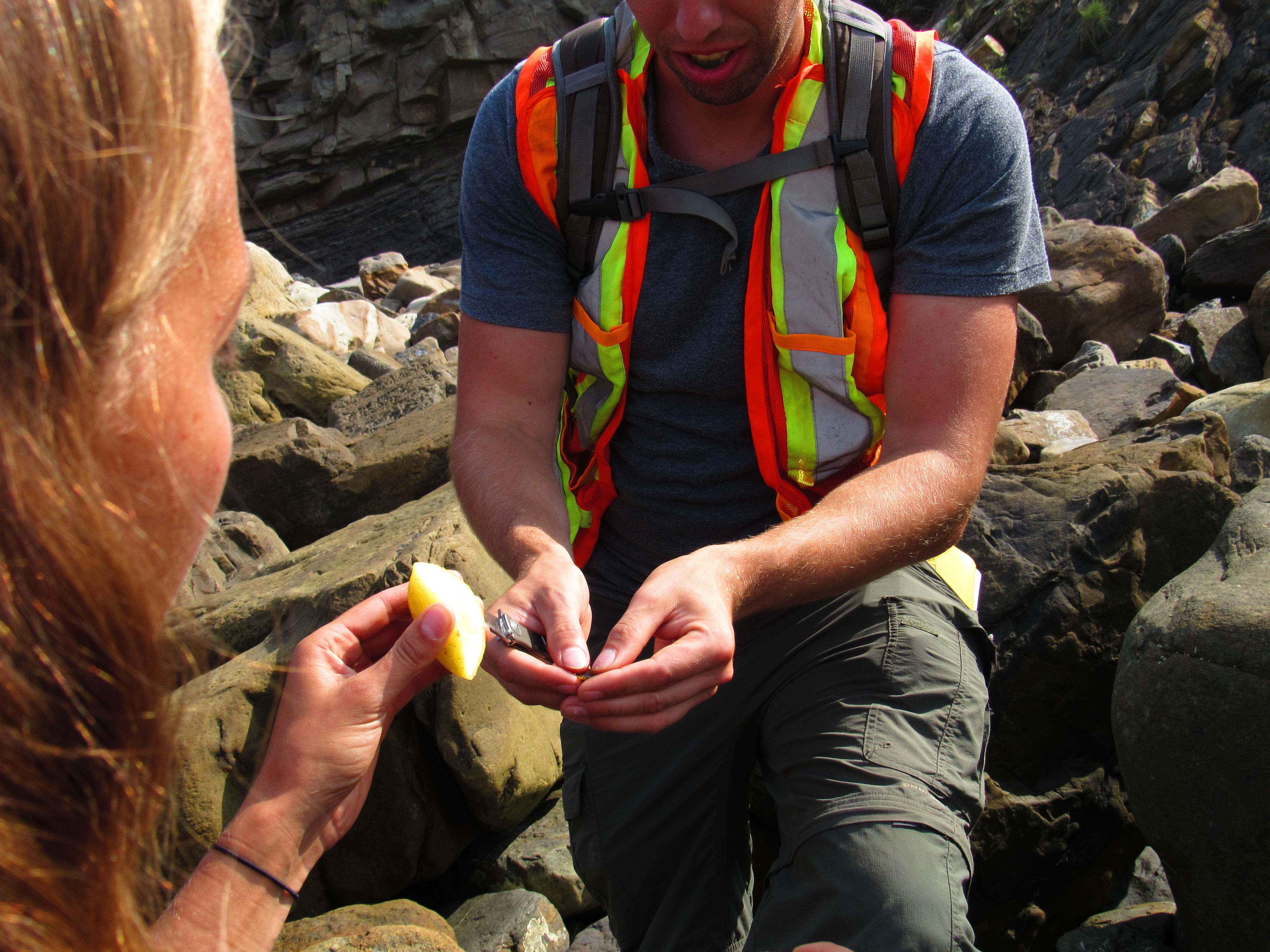
Some of the more… adventurous students, trying some fresh-from-the-sea cuisine.
Recent research by Dr. Mángano and Dr. Buatois, performed in collaboration with researchers from around the world, suggests that organisms were capable of movement much earlier than previously thought.
Here is the full interview about the recently discovered 2.1 billion year old motile organisms! https://t.co/yAonImF1B9
Around 80 specimens of 1 to 6 millimetre-sized, pyritized, string-shaped structures were collected from the Francevillian Basin in Gabon and subjected to a slew of analyses in order to determine their origin. The structures were found to have been formed within the sediment, lithified prior to compaction with open pore spaces, and filled with pyrite formed from sulfide generated by sulfate-reducing microorganisms.
After a careful comparison with several abiotic structures such as syneresis cracks and microbial mat roll-ups, as well as various biotic strucutres, it was determined that these structures were likely produced by a motile organism. It is unlikely that they were produced by a metazoan, since the structures change in width along their length, and sometimes merge. More likely, the research suggests, is that these trace fossils were formed by something akin to a slime mold.
The organism was opportunistic, evolving and living thanks to a temporary rise in oxygen levels at the time. When oxygen levels dropped again, and stayed low until roughly 650 million of years ago, the organism probably went extinct. As a result, it’s impact on the evolution of life on earth was probably short-lived.


 ichnoplanet.ca